 MovieSequelHub
When Tron: Ares finally hit screens in late 2025, it arrived carrying the weight of a franchise that had been dormant for fifteen years. The story picks up years after Tron: Legacy, introducing Ares, a masterfully crafted computer program on a dangerous mission to find a way to exist permanently in the human world. It's a bold premise, stuffed with new faces like Eve Kim and Julian Dillinger, and it very clearly wants to be its own thing. Yet after watching the film, many fans walked away feeling that the movie never truly got to breathe on its own terms. The problem isn't a lack of ambition—it's that Tron: Ares seems terrified of letting go of the past.
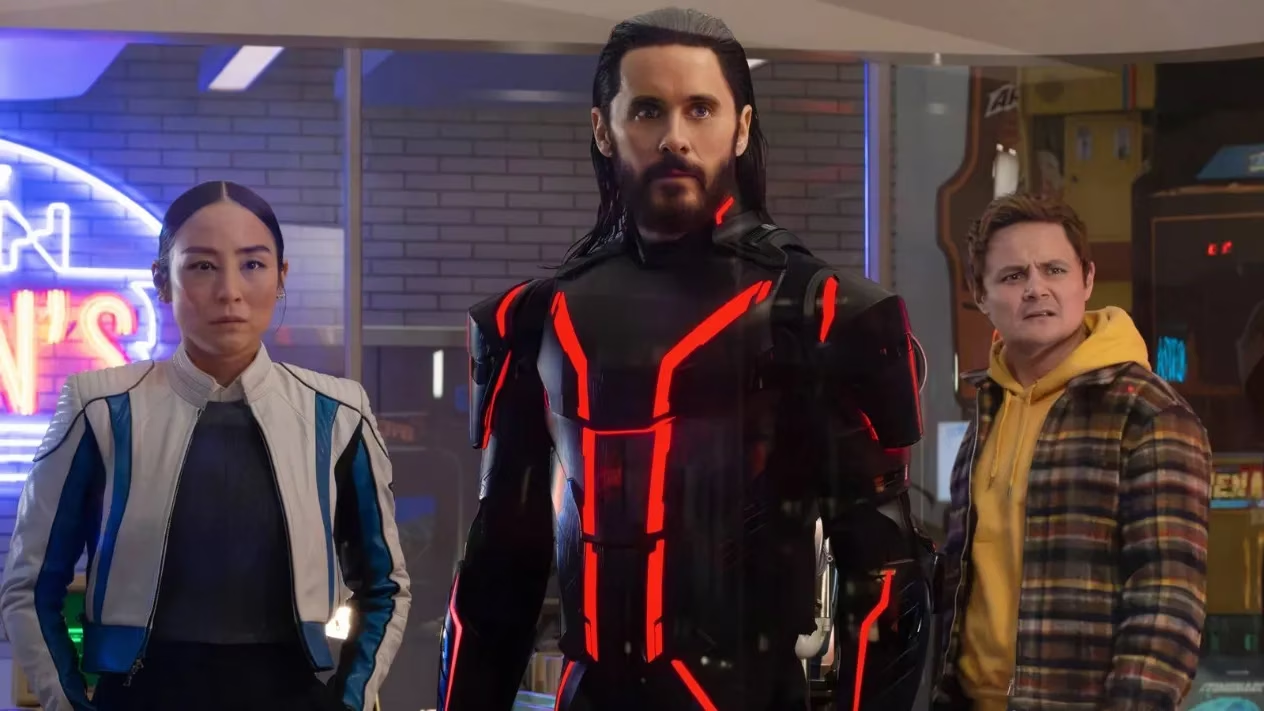
Let's be honest—legacy sequels are tricky. Audiences expect connections, but too many callbacks can choke a new story. Tron: Ares falls squarely into this trap. The narrative bends over backwards to tie itself to the original films, and almost every one of those connections feels forced rather than organic. For instance, the entire subplot involving Kevin Flynn could have been excised without affecting the emotional core of the movie one bit. Yet Flynn's name is dropped constantly, and Jeff Bridges even shows up for a brief cameo near the end. Instead of letting the new heroes resolve their own crisis, the script reaches back for a familiar face to save the day. It's a move that undermines the very characters the film worked so hard to establish.
Eve Kim, played with steely intelligence by Greta Lee, is the one who actually discovers the permanence code and uses it to bring down Julian Dillinger's corrupt enterprise. Her arc should be the driving force of the movie. And Evan Peters' Dillinger is the sort of smug tech overlord you love to hate. The ingredients for a fresh, self-contained cyber-thriller are all right there. But just when the tension peaks, the film veers into franchise maintenance mode. Out of nowhere, we get a scene hinting that Julian Dillinger enters the Grid, and another revealing that Ares is searching for Quorra—a character from Tron: Legacy who has absolutely nothing to do with this story. These moments don't add depth; they feel like checkboxes on a studio executive's list.
This schizophrenic identity is the movie's fatal flaw. It wants to be a standalone sci-fi adventure and a franchise connector at the same time, and it ends up doing neither well. Compare that to Tron: Legacy, which was also released years after the original. That film managed to honor its predecessor while telling a deeply personal father-son story. The difference? Legacy built its narrative around the existing lore without letting that lore hijack the plot. Tron: Ares seems afraid that if it doesn't constantly remind you this is a Tron movie, you'll forget.
The irony is brutal when you step back and look at the bigger picture. Kevin Flynn's death at the end of Tron: Legacy was the perfect setup for a separate sequel—one that moved beyond the Flynn saga and allowed new protagonists to carry the torch. The emotional goodbye was already said. The torch could have been passed cleanly. Instead, Tron: Ares second-guesses that elegant exit by dragging the past back onto the screen. The result is a film that never quite settles into its own groove. It's a great sci-fi concept diluted by the demands of franchise continuity.
What stings most for dedicated followers is seeing clear potential squandered. Joachim Rønning's direction delivers some stunning visual sequences. Jared Leto's Ares is a captivating antihero caught between his programming and a desperate yearning for something real. The production design is as sleek as ever, and the soundscape throbs with a future-noir energy. All the pieces for a memorable standalone entry are present. But the screenplay, credited to a long list of writers including Jesse Wigutow and Steven Lisberger, constantly trips over its own nostalgia. It tries to please everyone and ends up pleasing almost no one.
Looking ahead, the TRON franchise stands at a crossroads. If future installments continue to lean so heavily on unnecessary connections and legacy characters, they'll never find their feet in the modern era. Audiences in 2026 are savvy; they can smell a hollow callback from a mile away. The next chapter, whether it focuses on the Grid or the real world, needs to trust its own mythology. Let Ares search for Quorra if that's where the story genuinely leads, but don't tack it on just to remind us we're in the TRON universe. Great sci-fi worlds expand, they don't contract into self-reference.
Tron: Ares is a fascinating case study in how not to revive a beloved franchise. It's a film that could have been a bold leap into new territory but instead chose to tiptoe nervously in the shadow of its ancestors. For all its neon-soaked beauty and ambitious themes, it remains a reminder that sometimes the most courageous thing a sequel can do is to forget the past, not chase it.