 MovieSequelHub
The long-awaited return to the Grid did not unfold as Disney had hoped. When Tron: Ares materialized in theaters on October 10, 2025, it arrived riding a wave of neon-soaked nostalgia and a cast that blended fresh faces with a beloved returning icon. Yet by the time its debut weekend concluded, the third chapter in the cult sci-fi franchise had generated a domestic opening far below projections, triggering alarm bells throughout the industry. The Joachim Rønning-directed sequel, which sees Jared Leto’s sentient program Ares bridging the gap between the digital realm and the physical world, grossed an estimated $33.5 million in its first three days, a figure that landed more than $10 million short of the $45 to $50 million range that tracking had suggested.
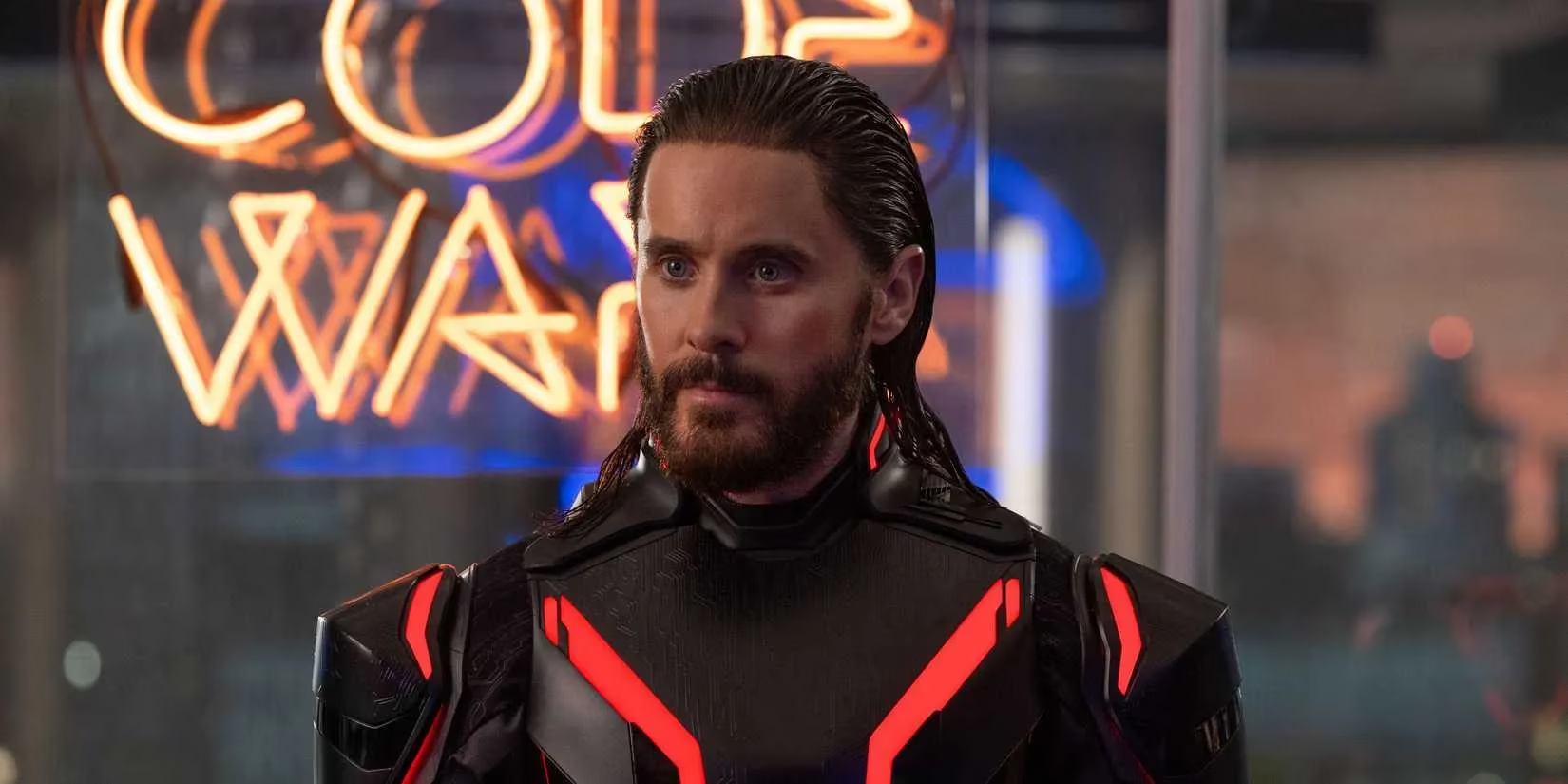
This disappointing launch immediately reshuffled the narrative around the film’s viability. Instead of surpassing the $44 million debut of its 2010 predecessor Tron: Legacy, Ares fell behind that benchmark by a considerable margin, further underscoring the challenge of reviving a property whose charm has always been more cult than commercial. Even more troubling for the production’s financial model was the comparison to Leto’s previous venture into blockbuster territory. Tron: Ares opened beneath the $39 million domestic start of Morbius (2022), the Sony Marvel misfire that went on to amass just $167.5 million globally against a reported budget of roughly $83 million. The parallel is an uncomfortable one for a project that carried a lavish $180 million production price tag, a number that pushes the estimated break-even point to a staggering $450 million when factoring in marketing and distribution costs. For context, Tron: Legacy accumulated around $400 million worldwide during its entire run (not adjusted for inflation), a total that Ares will need to surpass dramatically to avoid drowning in red ink.
Critical reception has done little to steady the ship. With a Rotten Tomatoes score sitting at a tepid 56%, the film has split audiences and critics alike, generating middling word-of-mouth that makes a sustained theatrical run improbable. The story, which introduces Leto as the artificial intelligence Ares alongside Greta Lee’s Eve Kim, and brings back Jeff Bridges’ Kevin Flynn in a legacy role, struggled to connect with general moviegoers weaned on more accessible sci-fi spectacles. Where Legacy found a hypnotic rhythm through Daft Punk’s iconic score and groundbreaking visual effects, Ares arrived at a moment when digital wizardry alone no longer guarantees a stampede to multiplexes. The result is a scenario in which the sequel seems unable to thrill audiences in the manner it failed to consistently excite critics.

Despite the underperformance, Tron: Ares still managed to claim the No. 1 spot on the domestic chart, largely because the weekend’s other wide releases were either smaller-scale counterprogramming or holdovers. The Channing Tatum dramedy Roofman from Paramount and Miramax landed in second place with a modest $8 million three-day gross. That figure, while unremarkable in raw numbers, paints a very different financial portrait given the film’s reported budget of just $17 to $19 million. Unlike Ares, Roofman was never designed as a tentpole, and its path to profitability does not hinge on record-breaking returns. Drawing comparisons to Tatum’s 2022 canine companion film Dog, which opened to $14.9 million and legged out to approximately $45 million domestically, Roofman could comfortably inch toward break-even by the end of its theatrical run or soon after via VOD and streaming platforms.
Further down the chart, Paul Thomas Anderson’s One Battle After Another continued to demonstrate sturdy legs. The Leonardo DiCaprio-led action thriller earned $6.8 million in its sophomore frame, a slim 38% drop that pushed its cumulative domestic total north of $25 million. The hold suggests that adult audiences are still willing to seek out star-driven original fare, a counterpoint to the franchise fatigue plaguing Tron. Rounding out the top five, Universal’s preschool-friendly Gabby’s Dollhouse movie dropped a mere 37% in its third weekend, and The Conjuring: Last Rites slid just 26% to $2.9 million as Halloween approached. The horror sequel was ultimately bumped from fifth to sixth position by the inspirational drama Soul on Fire, yet its retention remained impressive, hinting at the staying power of established genre brands—a luxury Ares does not seem to possess.
The weekend also witnessed a dramatic collapse for Dwayne Johnson’s The Smashing Machine. The Mark Kerr biopic, which had the inauspicious distinction of recording the lowest wide-release debut of Johnson’s leading-man career, plummeted 70% from third place to eighth, collecting a paltry sum in its second outing. The steep falloff echoes the difficulties October releases are having establishing themselves in a marketplace that has become brutally selective.
Looking ahead, any hopes that Tron: Ares would enjoy a multiple-weekend reign at the summit appear slim. The imminent arrival of Blumhouse’s Black Phone 2, a sequel to the 2021 Ethan Hawke horror hit, is expected to push Ares aside with ease. While ancillary revenue from VOD and eventual Disney+ streaming will recoup some of the investment, the theatrical trajectory paints a stark picture. Much like the digital landscape from which its protagonist emerged, Tron: Ares finds itself trapped in a system where the rules have changed, and the path to victory is more elusive than a glitch in the code.
The film’s performance forces a broader reckoning with the franchise itself. The 1982 original was a misunderstood pioneer, and Legacy was a sleek but divided sequel that benefited from a decade of nostalgia. Ares launched into a landscape saturated with legacy sequels and multiverse-spanning sagas, and its very existence as a continuation of a niche property always made it a risky proposition. With a reported budget far exceeding the prior entries’ combined adjusted costs, the financial bar was set impossibly high for a movie that could not galvanize mainstream enthusiasm. Whether this spells the end for the Tron series or merely a forced recalibration remains an open question, but one thing is certain: in a year where audiences have rewarded originality and emotional resonance, simply plugging into the Grid is no longer enough.