 MovieSequelHub
In the landscape of 21st-century science fiction cinema, numerous films have ended with the tantalizing promise of a sequel that never materializes. These unrealized continuations often leave narrative threads dangling and fictional worlds unexplored, creating a peculiar void for dedicated audiences. While some sequels eventually arrive after decades, like the long-dormant return to the Grid in Tron: Legacy, others remain in perpetual development limbo, sustained only by fan hope and cryptic comments from creators. Among these, the case of 2019's Alita: Battle Angel stands out, not just for its open-ended finale, but for a specific, high-caliber casting decision made with a clear sequel in mind—a decision that, as of 2026, remains a promise unfulfilled.
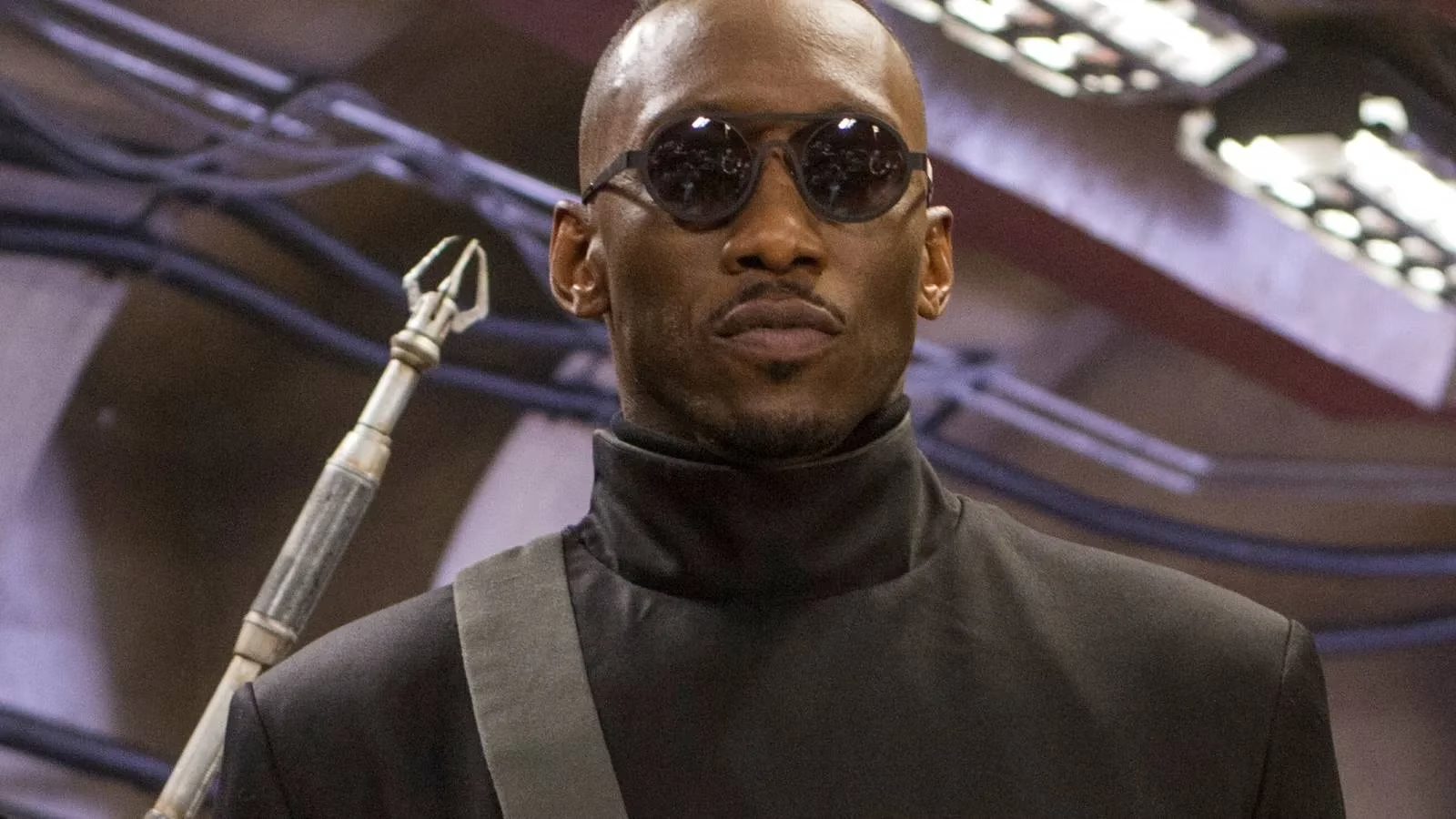
The primary antagonists in Robert Rodriguez's cyberpunk spectacle, co-scripted and produced by James Cameron, were the slick, manipulative Vector (Mahershala Ali) and his hulking enforcer, Grewishka (Jackie Earle Haley). However, the narrative cleverly established a greater, shadowy power operating from the floating city of Zalem: the enigmatic Nova. This entity possessed the chilling ability to project his consciousness into others, speaking through Vector and Grewishka like a puppeteer pulling strings on marionettes made of flesh and wire. For most of the film, Nova was a voice and a presence, a specter haunting the Iron City from above.
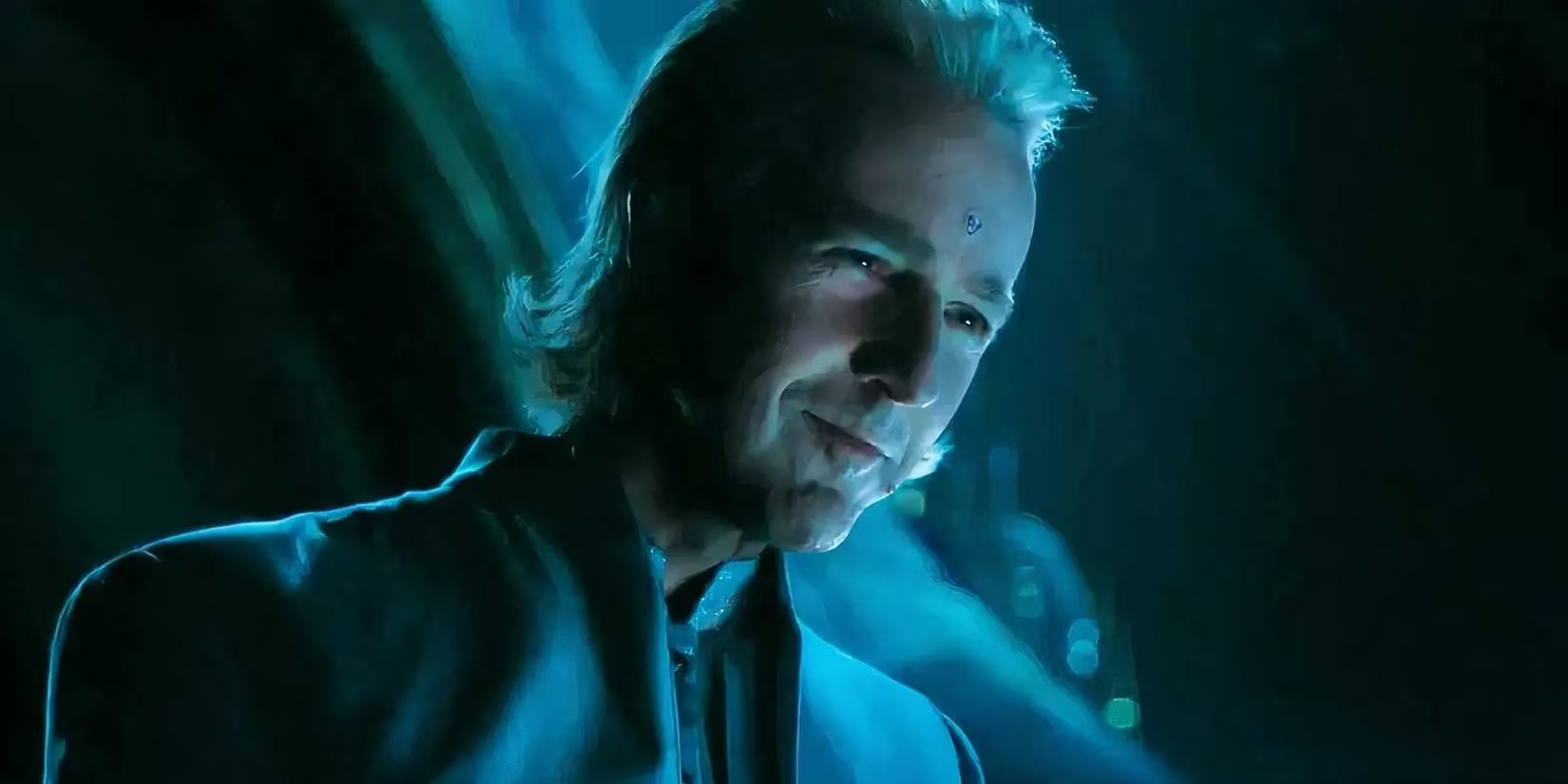
Yet, in two pivotal, fleeting moments, the real Nova was glimpsed. In a brief flashback and in the film's final, stunning sting—a scene as abrupt and impactful as a sniper's shot—the villain removed a pair of peculiar glasses to reveal his face. The man behind the omnipotent menace was none other than an uncredited Edward Norton. This revelation was not a mere cameo for star power's sake; it was a narrative seed planted with meticulous intention. The film's climax, with Alita (Rosa Salazar) raising her Damascus blade toward the sky where Nova observed, was a direct challenge, a declaration of a coming war. Director Robert Rodriguez confirmed this setup in a 2019 interview, stating Norton's Nova was unequivocally positioned for a major role in a sequel. The casting was a narrative check, written with the full expectation of a future cinematic payoff.
Norton was not the only actor waiting in the wings for a sequel that would expand the story. Michelle Rodriguez appeared in flashbacks as Gelda, Alita's fierce URM commander, her role a fragment of a larger past begging to be explored. Jai Courtney made a cameo as Jashugan, a Motorball champion, representing the dream of reaching Zalem—a dream whose dark reality a sequel would presumably expose. The framework for a richer narrative was all in place: Alita's recovered memories, the true, tyrannical nature of Zalem, and the final confrontation with the god-like Nova. The sequel's potential cast was like a dormant orchestra, its key players already assembled, awaiting the conductor's cue to begin the next movement.
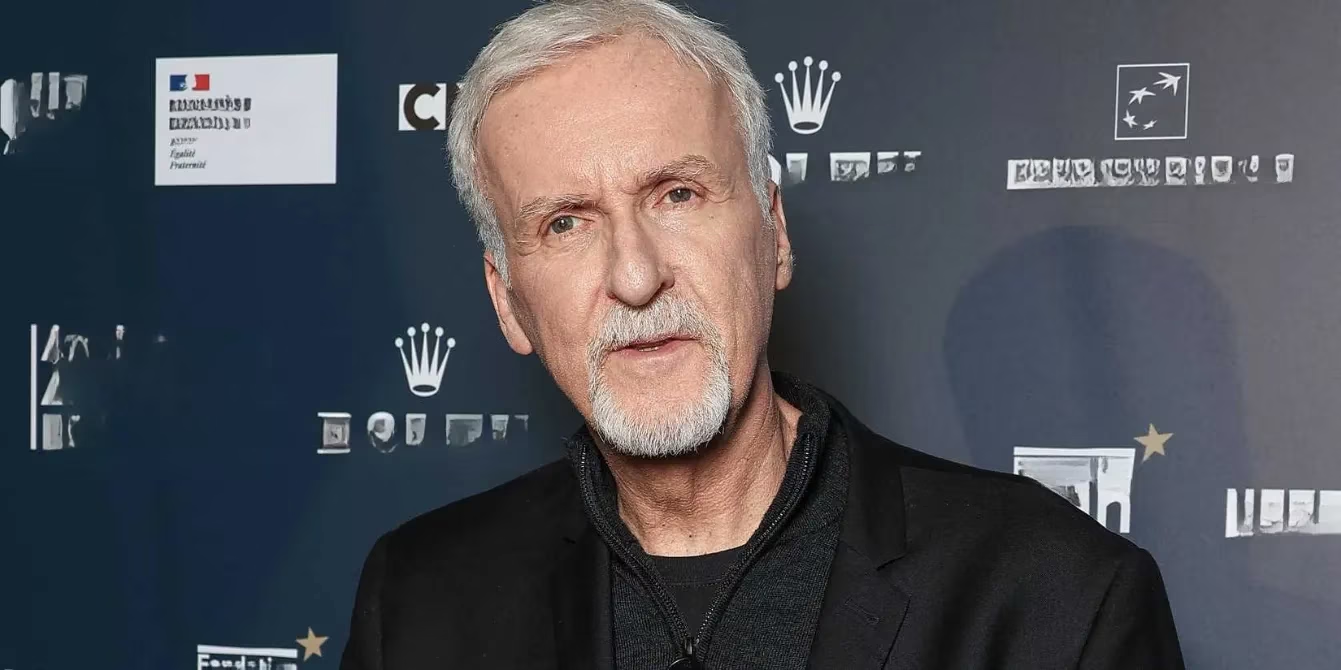
The path to Alita: Battle Angel 2, however, has been obstructed by a series of real-world hurdles. In the years following the film's release, progress was uncertain. While the core creative team—Rodriguez and Cameron—expressed strong interest, concrete news from the studio was scarce. Disney's acquisition of 21st Century Fox created a period of corporate assimilation, where the fate of Fox's existing IPs hung in the balance. Subsequently, the global pandemic brought Hollywood production to a standstill. The first significant glimmer of hope emerged in late 2022 when Rodriguez and Cameron reportedly swore a "blood oath" to make another Alita film. By mid-2023, Cameron was openly discussing working on the sequel alongside his monumental Avatar commitments, but public updates soon faded into silence.
As of 2025 and into 2026, the official stance remains one of hopeful intent rather than active production. Rodriguez has consistently reiterated, "we want to do another one." Rosa Salazar, the heart of the franchise, has offered optimistic but cautious comments, telling Collider, "It still might [happen]..." The situation resembles a slow-burning fuse on a stick of dynamite that has yet to reach its powder keg; the potential for explosion is there, but the spark's journey is agonizingly gradual. The sustained passion for the project from both the creative team and the fanbase wages a gradual war of attrition against Hollywood's inertia and corporate recalcitrance.
The film's legacy presents a compelling case for continuation. While critical reception was mixed (a 61% Tomatometer score on Rotten Tomatoes), its audience score sits at a stellar 92%, illustrating a passionate and growing fanbase. Its box office performance was solid, earning $405 million worldwide—a figure that proves it was far from a commercial failure. The film's reputation has only grown in the years since its release, evolving from a divisive release to a cherished cult classic, its visual ambition and heartfelt story gaining greater appreciation. The fan campaign, #AlitaArmy, remains one of the most dedicated and organized in modern fandom, a persistent digital heartbeat for the project.
Why a Sequel Still Makes Sense in 2026:
| Factor | Advantage for a Sequel |
|---|---|
| Cast & Characters | Key actors like Norton, Salazar, and others are poised to return. The heavy use of performance capture and CGI means actor aging is not a prohibitive issue. |
| Narrative Foundation | The first film's ending is a direct narrative springboard. Nova's reveal and Alita's defiance demand resolution. |
| Creative Team's Passion | Rodriguez and Cameron's continued, vocal commitment provides creative stability and direction. |
| Proven Audience | A strong, dedicated fanbase and healthy secondary market performance (streaming, home video) demonstrate sustained demand. |
| Technological Evolution | Advances in CGI and performance capture since 2019 could allow for even more immersive world-building and action sequences. |
One of Alita's greatest assets in this waiting game is, ironically, time. Unlike franchises reliant on the unchanged physicality of their human stars, much of Alita's cast exists within a digital realm. Rosa Salazar's performance was captured beneath layers of groundbreaking CGI, and Edward Norton's Nova was only briefly seen. This liberates the project from the ticking clock of aging actors, allowing it the potential to follow the path of franchises like Blade Runner, which returned triumphantly after decades, richer and more relevant for the wait. James Cameron's ongoing focus on the Avatar saga is a significant bottleneck, but it also provides a window for the sequel to be developed with care, rather than rushed.
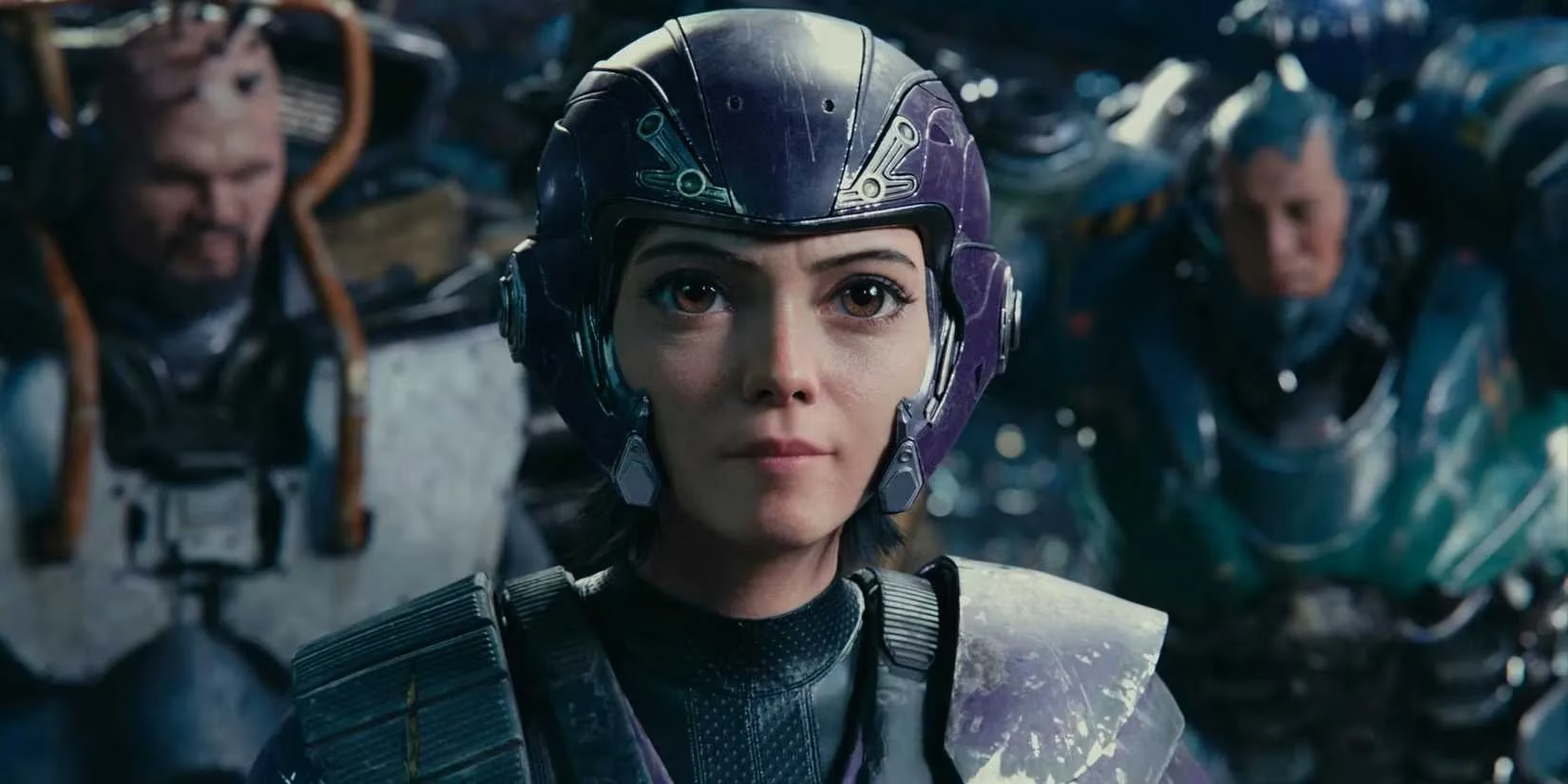
Ultimately, the story of Alita: Battle Angel 2 mirrors the journey of its own heroine: a tale of resilience, fragmented memory, and a fight against seemingly insurmountable odds to reclaim a destined future. Edward Norton's Nova remains frozen in that final moment, a chessmaster whose next move is perpetually pending. The sequel exists as a ghost in the machine of Hollywood—a fully conceptualized entity with a cast in place and a story to tell, yet lacking the final command to execute its code. The passion of its creators and fans is the energy that keeps this ghost from fading, a collective willpower willing a dream into reality. Whether that willpower can finally catalyze the project from development limbo into production is the last, great cliffhanger in Alita's story—one that, as of 2026, audiences are still hoping to see resolved.