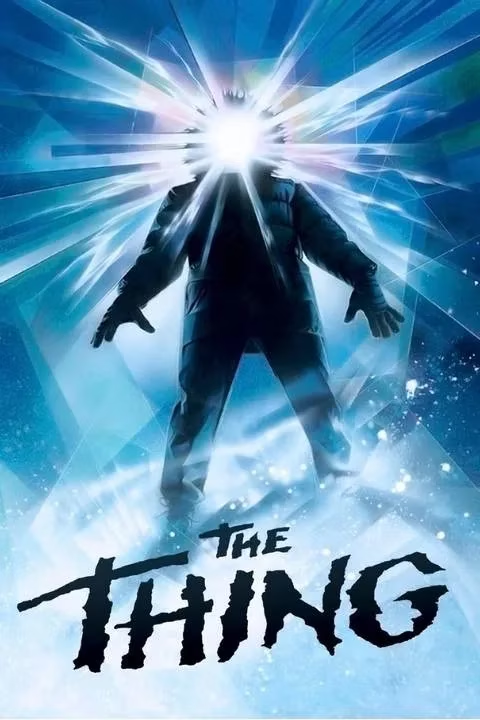
MovieSequelHub
As a horror obsessive, I've always been haunted by that final, chilling campfire scene in John Carpenter's The Thing. MacReady and Childs, two potential monsters, staring each other down in the Antarctic blizzard. The credits roll, and for decades, we're left frozen in that moment of paranoia. But what if I told you the story didn't end there? 🤯 While the 1982 masterpiece stands alone, its DNA quietly spawned a whole frozen ecosystem of sequels in the comics—stories that dared to answer the unanswerable and expand the terror. For fellow fans who've rewatched the film more times than we can count, diving into these hidden chapters feels like discovering a secret research outpost buried under decades of snow.
The Comic Book Continuations: Thawing the Frozen Mystery
In the early 90s, Dark Horse Comics decided to poke the alien lifeform with a stick. Their first sequel, "The Thing from Another World" (1991), picks up literally the day after the movie's ambiguous ending. It confirms a major fan theory: MacReady survives. He's rescued, but like a moth to a flame—or a paranoid survivor to a potential doppelgänger—he returns to the charred ruins of Outpost 31 to find Childs. This comic is like finding a detailed schematic of the creature's biology; it confirms some suspicions but introduces terrifying new complexities. The rescue mission becomes a Trojan horse, allowing the Thing to infect a new base and even a submarine, its tendrils of assimilation spreading like a silent, biological computer virus through a network.
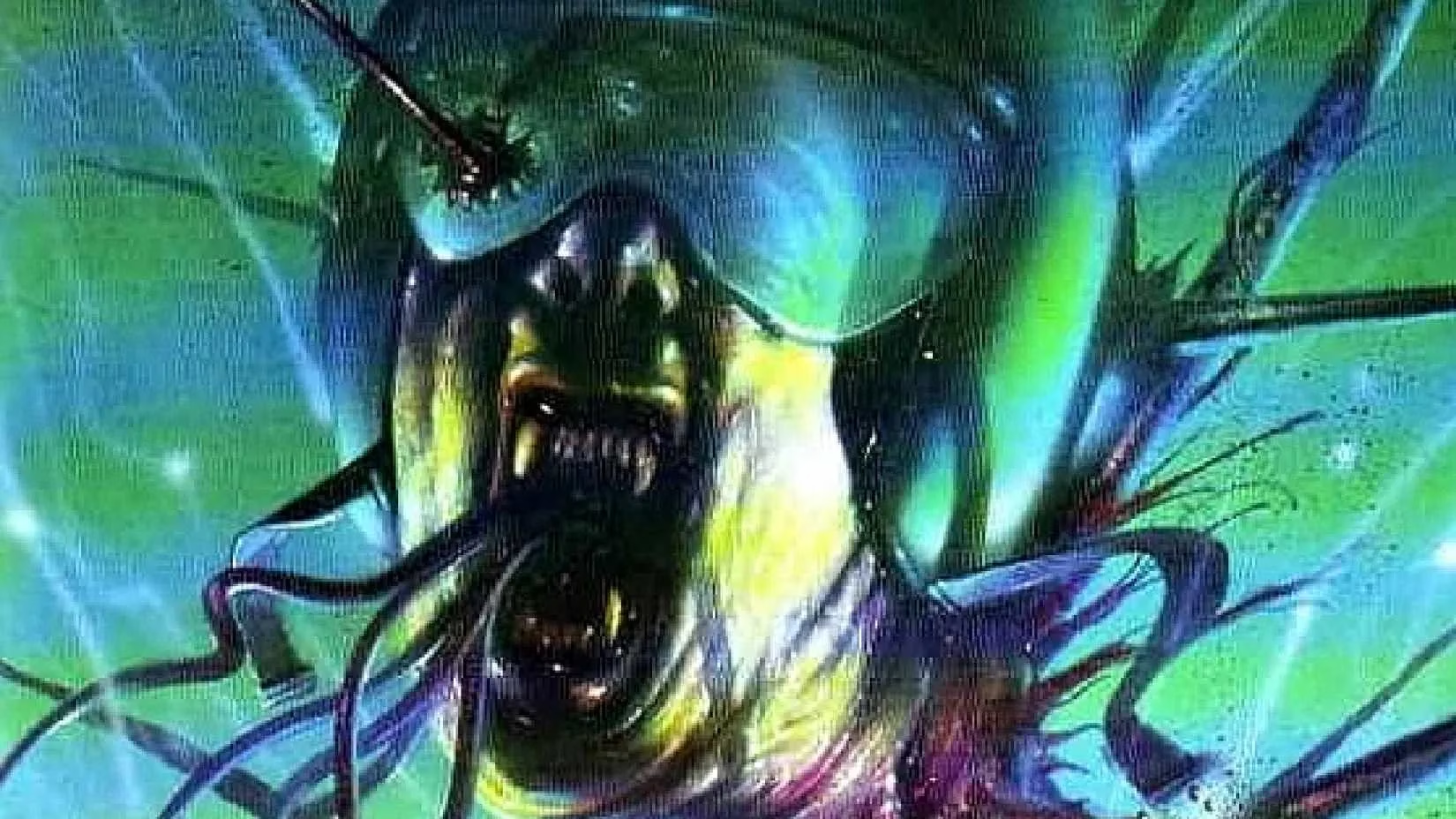
The saga continues in "Climate of Fear" (1992) and "Eternal Vows" (1993), forming a trilogy. MacReady's fight moves to an Argentinian base, where the stakes are catastrophically raised. Here's the wild part: Childs returns, fully assimilated. The final confrontation sees a giant, spider-shaped abomination of the Thing seemingly destroyed by an airstrike. But "Eternal Vows" delivers the most philosophically chilling twist: the Thing, after taking the form of a woman in New Zealand, develops a primitive conscience. We see the monster's perspective, struggling to spread without detection—a predator learning the value of stealth. Its eventual escape, transforming into a fish and vanishing into the ocean, is a horror masterpiece of implication, leaving the threat global and perpetual.
A Separate, Parallel Nightmare
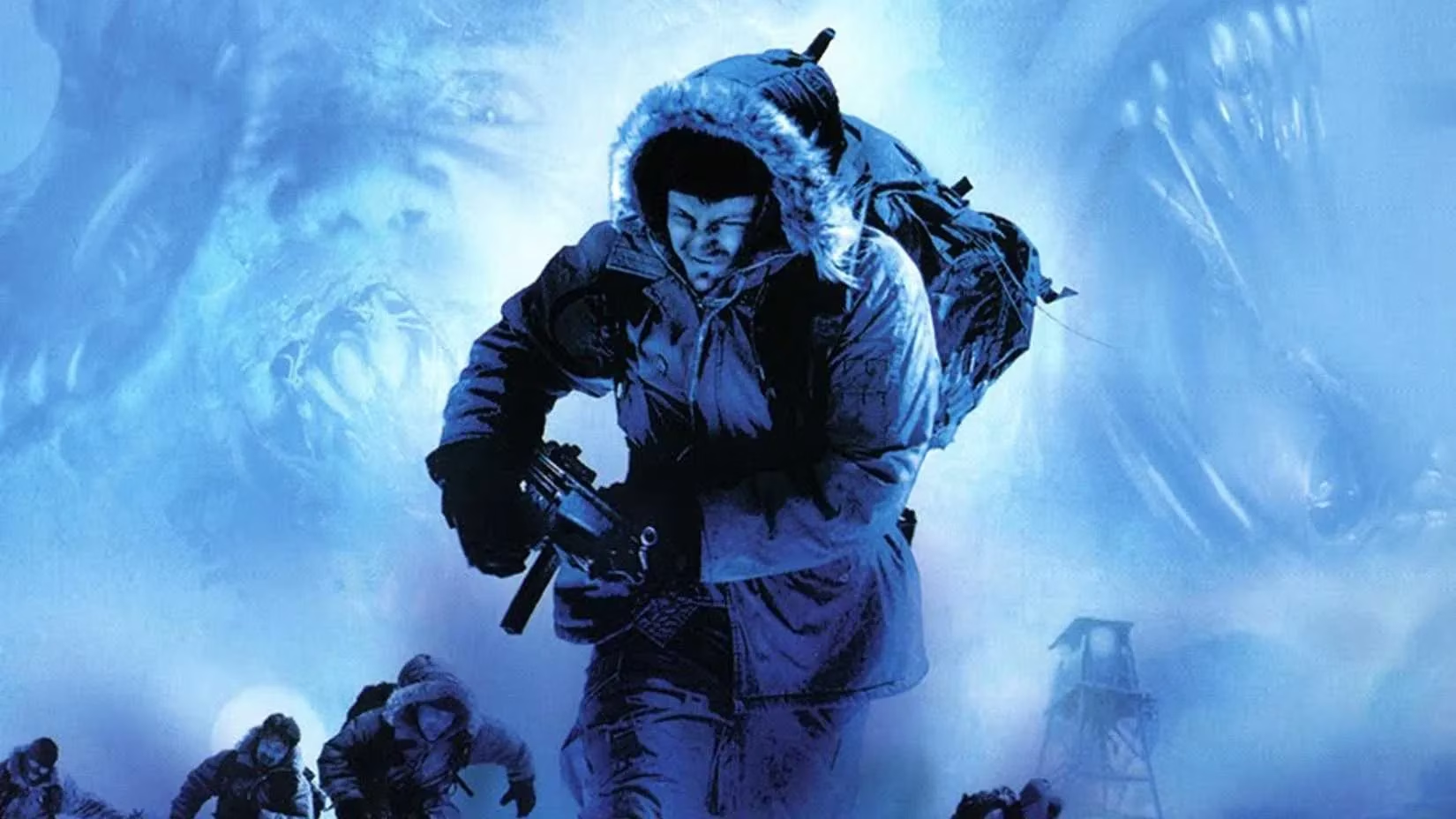
Dark Horse wasn't done. In that same fertile period of 1993, they released a second, standalone sequel: "Questionable Research". This one ignores the other comics, creating a terrifying "what-if" scenario. A new, well-prepared research team arrives, armed with knowledge of the creature. They think they're hunters. They are, in fact, the perfect delivery system. This story is a masterclass in dramatic irony, watching supposedly smart people walk knowingly into a trap they designed themselves. The ending strongly implies the Thing escapes toward civilization, making the contained terror of the film feel like a quaint prelude to global apocalypse.
Why These "Secret Sequels" Are a Gift to Fans
Let's be clear: none of these replace Carpenter's film. That's impossible. But as expansions, they're remarkably respectful. They understand the core mechanics:
-
The Paranoia: The infection is always an unseen whisper in a crowded room.
-
The Rules: Assimilation is perfect, and trust is a luxury no one can afford.
-
MacReady's Resilience: Kurt Russell's hero appears in every comic installment, a weary, persistent thorn in the Thing's side.
They add fascinating new layers:
-
The Thing Evolves: It learns speech, strategy, and even feels a rudimentary fear. In "Eternal Vows," its struggle with a newfound conscience is as unsettling as any body horror—a monster wrestling with the ghost of the humanity it consumed.
-
The Scale Expands: From a submarine to a New Zealand town, the threat escalates, yet the stories often maintain that claustrophobic, frozen dread. The terror isn't in the size of the monster, but in the silence before it strikes.
-
The Formula is Honored: Each story is a new iteration of the original's perfect setup: isolation + infiltration = paranoia. They're like different scientists running the same catastrophic experiment with slightly varied parameters.
The Bigger Franchise Iceberg
These comics are part of a larger, if scattered, legacy:
-
The 2002 Video Game: A direct sequel to the film where you lead a team, managing their fear and trust—a brilliant interactive translation of the movie's themes.
-
The 2011 Prequel: Explores the Norwegian camp, connecting directly to the film's opening. While it has its moments, it reminds us that the unknowable is often scarier than the explained.
Final Verdict: Should You Seek Them Out? 👁️
If the ending of The Thing lives rent-free in your head, these comics are essential. They are to the 1982 film what a detailed forensic report is to a perfect crime scene—they don't lessen the impact, they deepen the fascination. They prove the concept is a perpetual motion machine of horror, capable of generating new nightmares without betraying the original's frozen, paranoid heart. In a world of lazy reboots, these sequels feel like lost transmissions from a universe where the flame thrower fuel never ran out. The final question isn't "Who's human?" anymore. It's "Where will it surface next?" And that, my friends, is a chill that never thaws. ❄️🔥