 MovieSequelHub
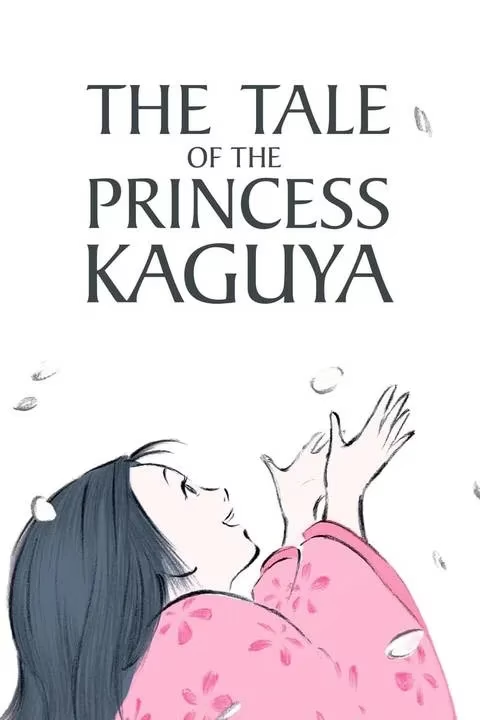
So, here I was, thinking I knew everything about Studio Ghibli's soul-crushing masterpiece, The Tale of the Princess Kaguya. You know the one—that achingly beautiful watercolor dream that makes you contemplate life, the universe, and why you're ugly-crying over a moon princess. Turns out, I didn't know the half of it. Just when you think the well of Ghibli magic has run dry, boom! Up pops a revelation that flips the whole story on its head. Apparently, the late, great Isao Takahata had a whole other chapter in mind, a prequel stashed away in his personal archives, just waiting to be found. Talk about a plot twist from beyond the grave!
Let me set the scene for you. It's 2026, and researchers over at Tokyo Zokei University are probably sifting through dusty boxes, drinking terrible coffee, when they stumble upon a treasure trove. We're talking over 130 handwritten pages of Takahata's drafts, notes, and outlines. My first thought? Man, I wish my handwriting was that legible. But my second, more important thought was: What's in there? The answer was a jaw-dropper. Among all that paper was an "Adaptation Proposal for an Animated Version of The Tale of the Bamboo Cutter." But this wasn't just the movie we know and love. Nope. This was the story of what happened before the bamboo stalk even sprouted.
The Celestial Origins We Never Saw
We all remember how the 2013 film starts: a tiny, magical princess found inside a glowing bamboo stalk by a kind old cutter. It's mysterious, it's beautiful, it's... well, it's not the whole story, according to these notes. Takahata's early concept dove headfirst into Kaguya's life on the moon. I'm not talking about a quick flashback. This was a full-blown prologue, a peek into her celestial home before she was ever sent to Earth as a form of exile. Imagine that! The notes describe a poignant scene between a younger Kaguya and an elderly lunar guardian. This guardian isn't just giving her a pep talk; he's basically giving her the cosmic version of "the talk," warning her about the dangers and temptations of that messy, imperfect planet called Earth.
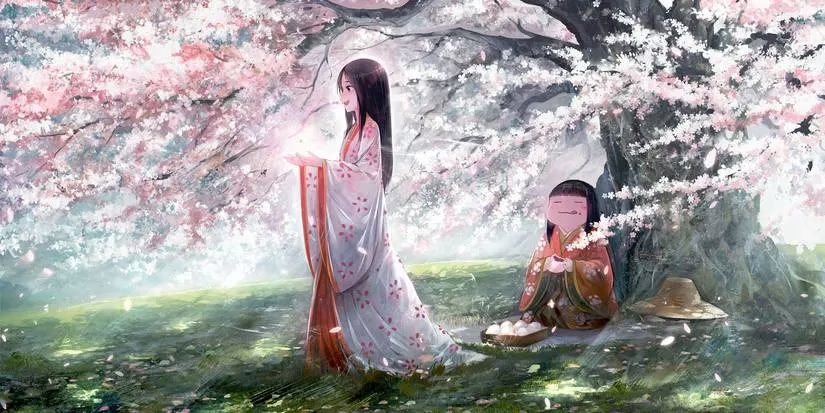
Animation historian Seiji Kano broke it down for us normies. He said Takahata wasn't just trying to add some cool moon lore for the sake of it. Oh no. The man had a mission. He wanted us to understand the emotional logic behind Kaguya's exile. Why would a perfect moon princess yearn for a flawed, mortal life? Kano put it perfectly: "He wanted audiences to understand her desire for imperfection — the beauty of mortality." That's Takahata for you, always punching you right in the feels. This prequel concept was meant to be a mirror, reflecting his lifelong obsession with the messy, beautiful tension between purity and pain. It's the theme that runs through all his work, and knowing this makes Kaguya's later longing for cherry blossoms and human love hit about ten times harder.
More Than Just One Lost Story
As if the Kaguya bombshell wasn't enough, these archives were like a Russian nesting doll of creative what-ifs. They contained early full scripts for other projects that never saw the light of day, like Oeyama and The Jewel I Received. Now, these might not be directly about our moon princess, but they reveal something crucial about Takahata's brain. The guy was constantly wrestling with moral conventions. His characters—whether they were demons, foxes, or moon maidens—were never simple heroes or villains. They were shaped by contradictions, by the messy business of having a heart (or whatever celestial beings have).
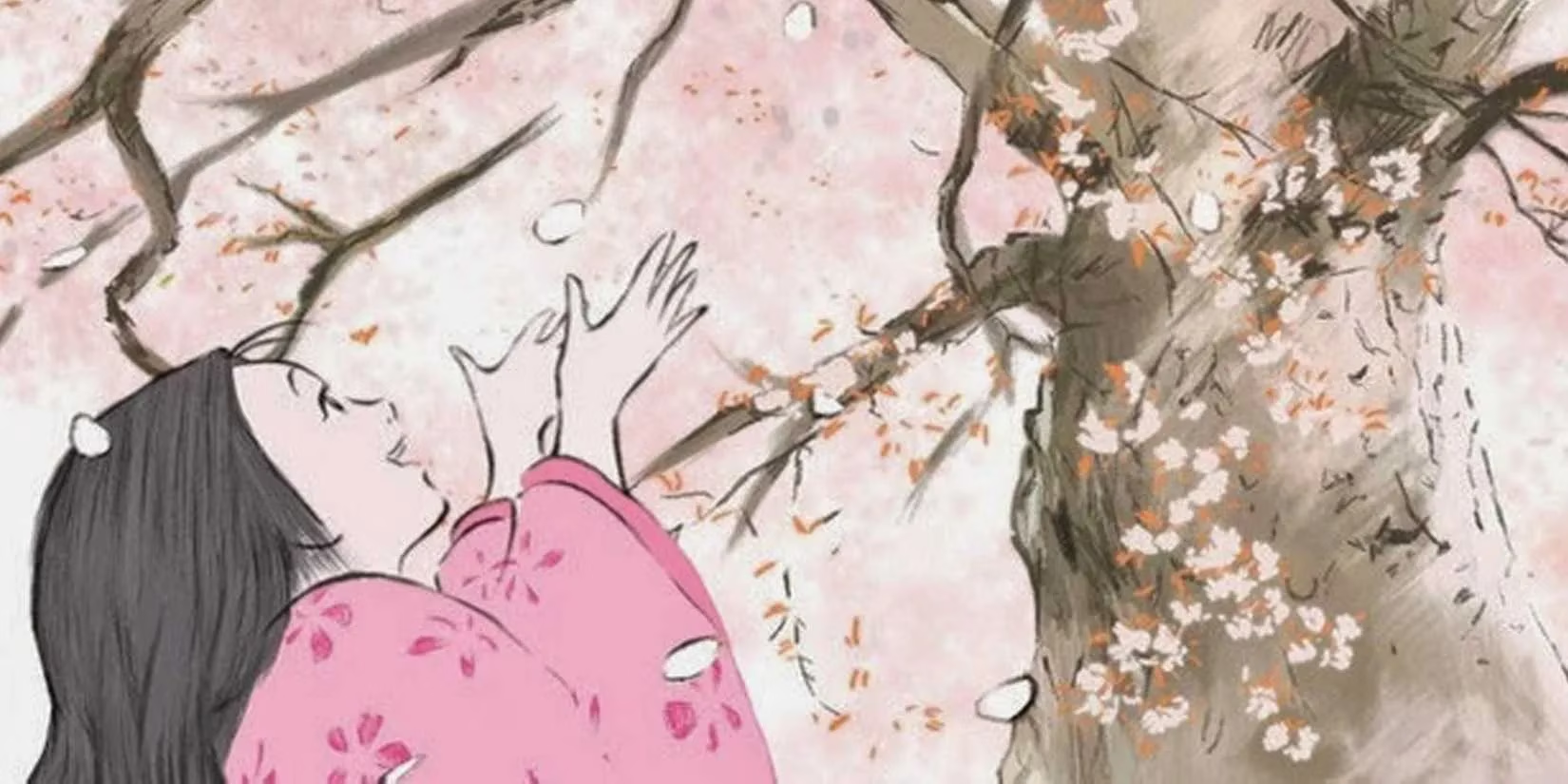
Takahata's own son, Kosuke, got real emotional about the find. He called these manuscripts proof of his dad's "relentless imagination." He pointed out that even decades before Kaguya was made, Takahata was already reimagining old folktales with a hefty dose of empathy instead of judgment. "You can feel his hunger to create something profound," Kosuke said, describing the drafts as his father's artistic "plea to be understood." And honestly, doesn't that just sum up all great art? It's a message in a bottle, hoping someone on the other shore gets it.
A Cosmic Cycle, Not Just a Tragedy
Let's just sit with this for a second. What if this prequel had actually been made? We wouldn't see The Tale of the Princess Kaguya as a standalone, tragic fairy tale anymore. We'd see it as part of a grand, cosmic cycle. A story of love, rebellion, and return that spans the heavens and Earth. It would transform her journey from a simple punishment into a conscious, albeit painful, choice for experience. The discovery of these notes kinda proves what us die-hard fans have been whispering for years: Kaguya is Ghibli's most emotionally complete work. But not because it's neatly tied up with a bow. Quite the opposite! It's perfect because it dares to feel unfinished, to leave that ache of longing right there in your chest. The lost prequel just adds another layer to that beautiful, unresolved chord.
So, what now? We have these incredible insights, but the film itself remains a singular, breathtaking piece. It's like finding the blueprint for a legendary artist's greatest painting—it doesn't change the painting, but it changes how you see every single brushstroke. The story of the bamboo cutter's princess is now, forever, also the story of the story that almost was. And in a weird way, that feels exactly like something Takahata would have loved: a tale forever reaching for something just beyond the frame.
In a Nutshell: What We Learned
| Discovery | What It Means | The Feels Factor |
|---|---|---|
| 130+ handwritten pages from Takahata's study | A direct line into the director's creative process. This isn't gossip; it's the source code. | 🤯 Mind officially blown. |
| A planned prequel about Kaguya's moon life | The film we know was meant to be Part 2 of a bigger story. Her exile had a prologue. | 😭 It adds so much context to her longing! |
| Themes of imperfection & mortality | Takahata wanted to explore why a perfect being would choose a flawed world. | 🥹 Classic Takahata, making us ponder existence. |
| Other unrealized projects (Oeyama, etc.) | Proof that Takahata's genius was a constant, overflowing well of complex ideas. | 🤔 So many what-ifs... |
| An artistic "plea to be understood" | These weren't just notes; they were a deeply personal communication from the artist. | ❤️ Okay, now I'm emotional. |
Finding this stuff in 2026 is a gift. It's a reminder that great art isn't a product; it's a process, sometimes a messy, unfinished one. And sometimes, the most beautiful stories are the ones that remain slightly out of reach, just like the moon itself.