 MovieSequelHub
The enduring legacy of Smallville continues to resonate through the superhero landscape, with passionate fans keeping hope alive for a continuation of Clark Kent's origin story. At the recent Liverpool Comic-Con, the original cast reunited, sparking renewed excitement about the long-rumored animated sequel series. Tom Welling and Michael Rosenbaum, the iconic portrayers of Clark Kent and Lex Luthor respectively, shared candid updates about the project's development hell. Despite having concept artwork ready and the involvement of creators Al Gough and Miles Millar, Warner Bros.' silence remains the frustrating roadblock preventing this passion project from soaring.
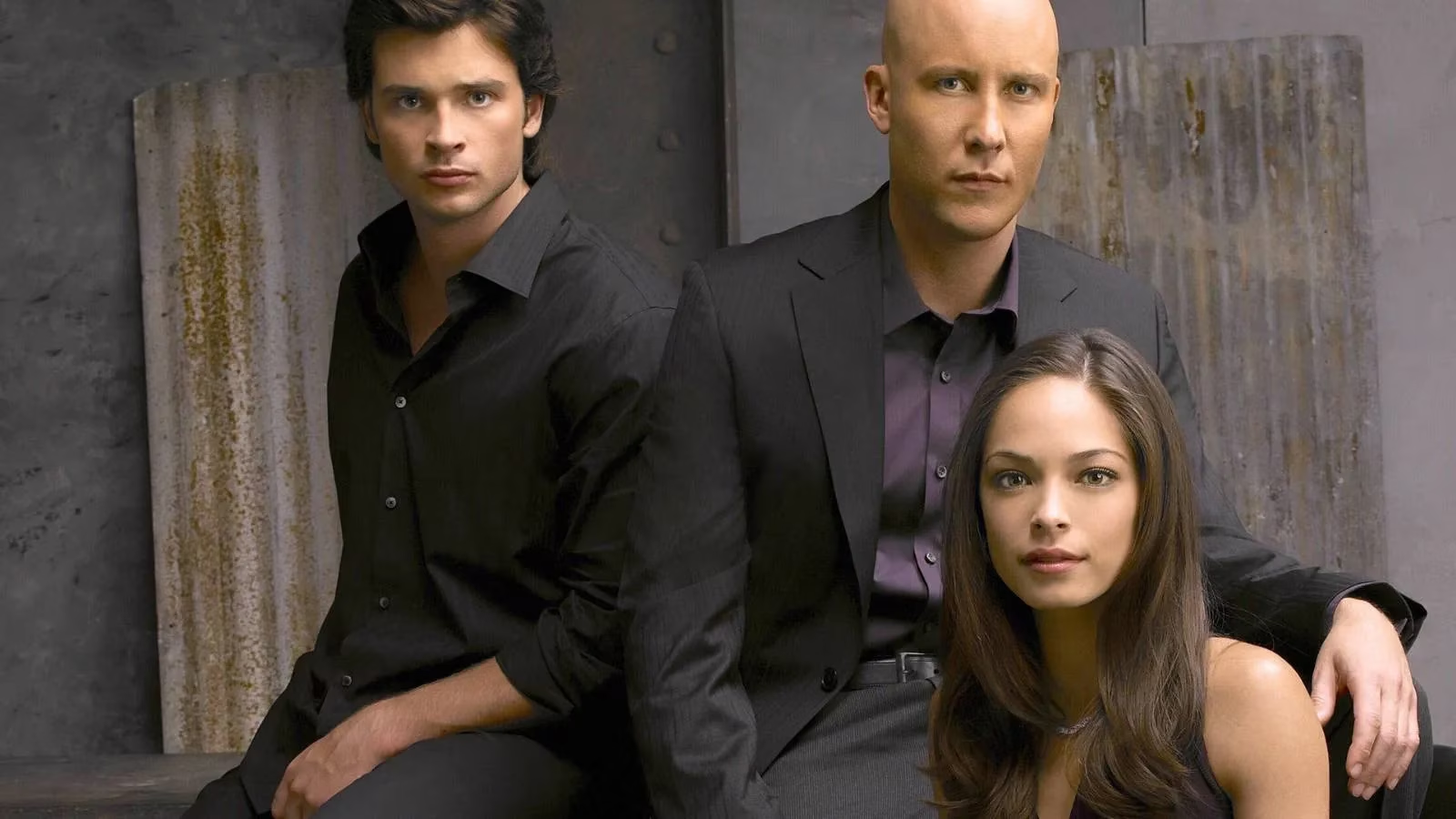
Rosenbaum revealed the bittersweet reality during the convention panel: "We did some artwork and Al and Miles, who created Smallville, they're attached. Tom and I wanna do it, but it's gotta be the right time." His tone shifted to one of pragmatic resignation as he acknowledged corporate realities: "You have to make sure that the studio is wanting to do something like that right now." The actor emphasized their commitment to involving original cast members while lamenting the uncertainty, calling it a "work in progress" with no clear timeline.
Welling's frustration became palpable when recounting his attempts to move the project forward. During a late 2024 interview, he disclosed the baffling radio silence from Warner Bros.: "We haven't even gotten a response! It's the weirdest thing because it is more of a fan-driven idea." His laughter carried notes of exasperation as he clarified the project's modest ambitions: "It's not going to be a blockbuster. It's not going to be a financial windfall for any of us. We all like each other, we all like working together, and if we could do it, it'd be fun."
Behind-the-scenes dynamics reveal deeper complications. James Gunn's DC Universe reboot appears to be consuming Warner Bros.' attention, particularly with the upcoming Superman film. Original showrunner Al Gough pinpointed this conflict in March 2025: "They are in the process of rebooting Superman again, kind of unfortunately, I think, keeps our thing off the table for a bit." His wry observation about Hollywood's cyclical nature—"Everything comes around in one form or another"—hinted at potential future opportunities while acknowledging current stagnation.
Paradoxically, the convention revealed fascinating parallel ambitions among the cast:
| Actor | Desired DCU Role | Character Connection |
|---|---|---|
| Tom Welling | 🦇 Batman | Heroic legacy continuation |
| Michael Rosenbaum | 🤡 Joker | Villainous transformation |
| Laura Vandervoort | 💖 Harley Quinn | Complex character evolution |
This enthusiasm for new DC interpretations exists alongside their commitment to the Smallville universe. The animated format presents practical advantages that could overcome previous limitations:
-
💰 Cost efficiency: Dramatically lower production expenses compared to live-action
-
🕰️ Aging concerns eliminated: Allows original cast voices without physical constraints
-
🌌 Creative flexibility: Enables more ambitious storylines and visual metaphors
-
🔄 Continuity preservation: Maintains established character dynamics and relationships
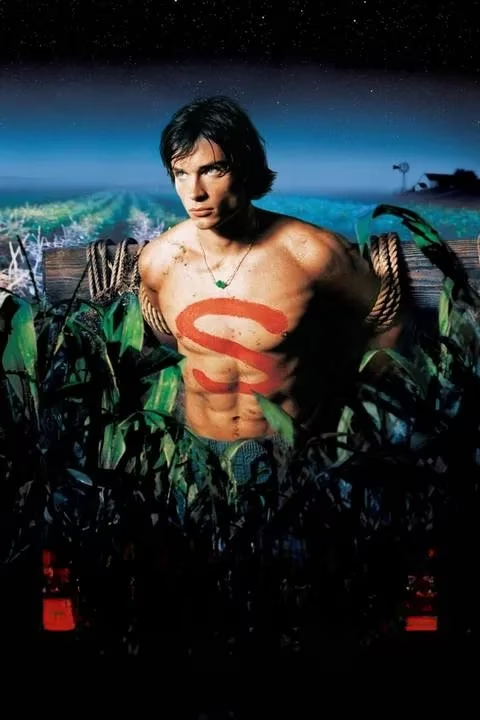
DC Studios' Elseworlds initiative offers a promising framework where Smallville could theoretically thrive—existing outside main continuity while leveraging its established fanbase. The show's persistent popularity through streaming platforms demonstrates remarkable staying power, with new generations discovering the coming-of-age superhero narrative. This enduring relevance underscores the potential audience for a revival, though corporate priorities remain elusive.
The emotional investment from the creative team remains undeniable. Rosenbaum's convention promise—"We plan to use all these guys when we get it made"—suggests a heartfelt tribute to the original ensemble. Yet the conditional "when" hangs heavily in the air, unanswered. Practical considerations blend with nostalgia: animation provides feasible resurrection while honoring the show's legacy without compromising its essence.
Current industry patterns suggest possibilities beyond Warner Bros.' gates. Streaming services regularly revive cult properties, and Smallville's built-in audience presents a compelling case. The cast's willingness to return—even in voice roles—creates unique conditions for revival. Still, the unresolved tension between passionate creators and corporate gatekeepers leaves the project hovering in uncertainty, much like Clark Kent himself caught between his human upbringing and Kryptonian destiny.
Perhaps the most telling aspect emerges in what remains unsaid: no one has declared the project dead. The persistent development efforts and convention discussions maintain a flicker of possibility. As superhero narratives continue evolving across media landscapes, Smallville's unique position as a foundational television phenomenon creates organic opportunities. The coming years may yet reveal whether corporate priorities align with creative passion—or if this particular chapter of Clark's journey must remain in the phantom zone of unrealized projects.