 MovieSequelHub
As 2026 unfolds, the martial arts genre continues to owe an immense debt to Bruce Lee, a man whose filmography spanned a mere five starring vehicles yet sparked a cinematic universe of sequels, remakes, and clones. Bruce Lee’s on-screen legacy was forged between 1972 and 1973 with The Big Boss, Fist of Fury, Way of the Dragon, Enter the Dragon, and the posthumously completed Game of Death. Although his life was tragically cut short, the demand for more Lee‑style action gave rise to the strange and often controversial subgenre known as Bruceploitation. From obscure kung fu quickies to lavish big‑budget reinterpretations, filmmakers have repeatedly plundered his classics—most notably Fist of Fury (also known as The Chinese Connection)—to create new stories. Quality has varied wildly, with some efforts becoming laughable footnotes and others achieving a level of artistry that rivals the originals. Here, we explore seven notable entries in the Bruce Lee sequel and remake pantheon, from the nearly forgotten to the undisputed masterpiece.
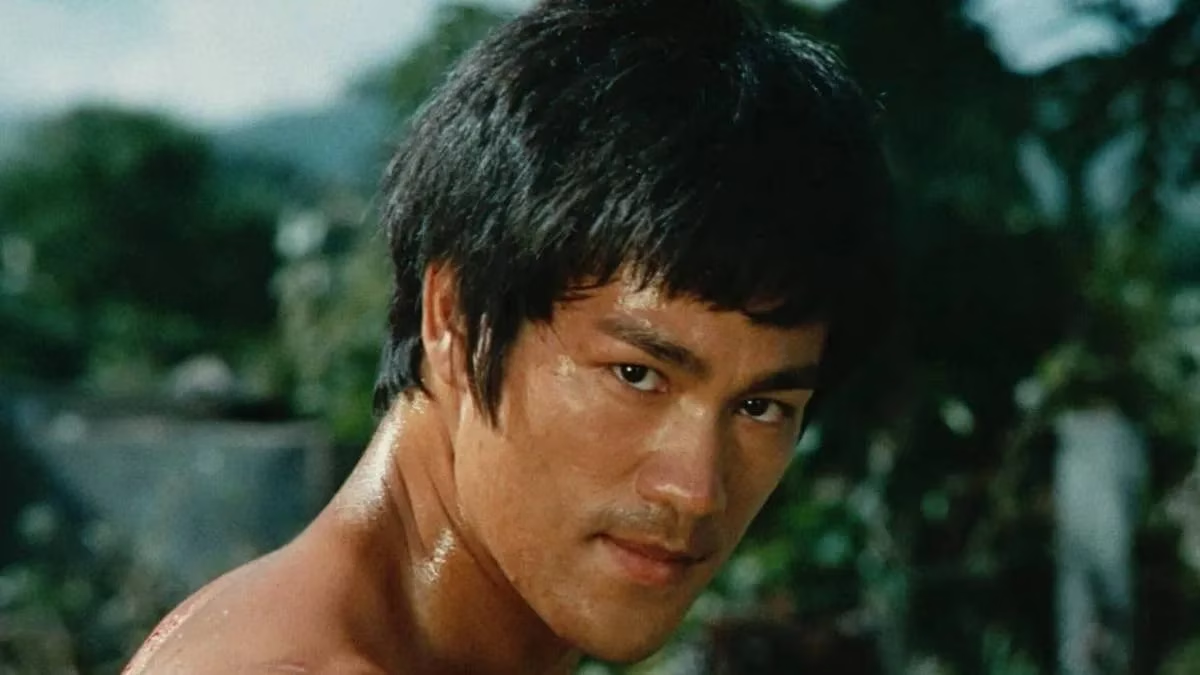
The Big Boss Part II (1976) – An Unofficial Sequel with an Unexpected Star
One of the most elusive 1970s old‑school kung fu movies, The Big Boss Part II attempts to continue the story of Bruce Lee’s breakout hit without its original lead. Rather than enlist a Lee lookalike as the protagonist, the film pivots to Lo Lieh, a legendary martial arts actor once hailed by Quentin Tarantino as “the greatest actor” in the genre. In this unofficial sequel, Lo Lieh plays the brother of Lee’s character, returning to the ice factory setting to confront a new wave of criminal exploitation. Bruce Le—a frequent Bruceploitation star—makes a fleeting cameo as the fallen hero, but it is Lo Lieh who carries the film with a simmering intensity and physical gravitas. Despite being hamstrung by clumsy editing and a threadbare narrative, the movie delivers several superbly choreographed brawls that showcase Lo Lieh’s formidable presence. For completists willing to hunt down a degraded VHS transfer, The Big Boss Part II remains a fascinating curiosity that dared to tell a different kind of story instead of merely mimicking Lee.
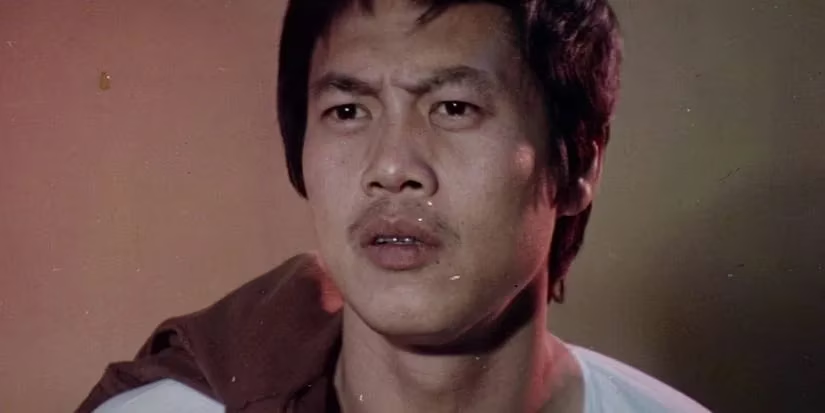
New Fist of Fury (1976) – Jackie Chan’s False Start
Before he became the master of comedic kung fu, a young Jackie Chan was struggling to find his screen identity. New Fist of Fury represented a major attempt by director Lo Wei—who had directed Bruce Lee in The Big Boss and Fist of Fury—to mold Chan into the next Bruce Lee. The 1976 film reimagines the Fist of Fury storyline, pitting Chinese fighters against Japanese oppressors and bringing back original cast members like Nora Miao to lend an air of authenticity. Tragically, the experiment failed. Chan, still raw and unable to inject his natural charm, was forced to mimic Lee’s stoic mannerisms and high‑kicking style, resulting in a joyless retread that lacks the fire and emotional weight of the original. The fight choreography has its moments of intricate footwork and powerful blocks, yet the entire production feels like an uninspired photocopy. For students of martial arts cinema, New Fist of Fury is a cautionary tale about trying to replicate a once‑in‑a‑lifetime performer. Today, it serves primarily as a stepping stone that eventually led Chan to develop his own unbeatable screen persona.
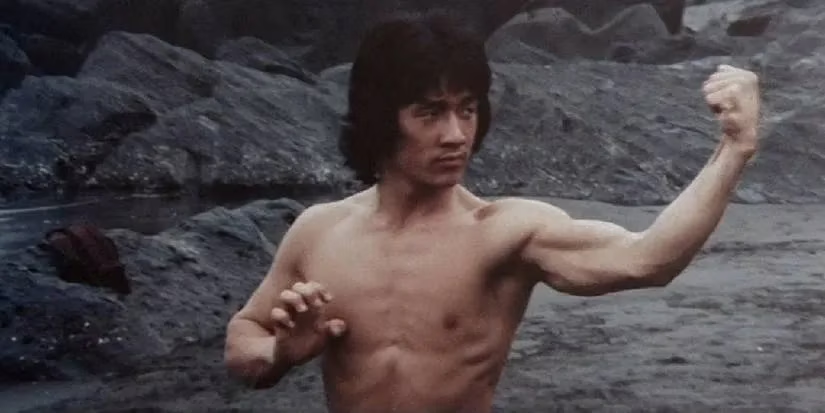
Way of the Dragon 2 (1979) – Bruce Le’s Greatest Revenge
Contrary to its title, this low‑budget Hong Kong production has nothing to do with Lee’s Rome‑set classic. Instead, it is yet another reworking of Fist of Fury, retitled for different markets and starring Bruce Le, one of the most prolific Bruceploitation performers. Way of the Dragon 2, also known as Bruce Le’s Greatest Revenge, wastes no time on exposition: within minutes, Chinese kung fu students are clashing with Japanese gangsters in a cycle of escalating violence. The plot is tissue‑thin, but the filmmakers understand their audience, and the film leans heavily on an endless barrage of hand‑to‑hand combat. Bruce Le, while never approaching the magnetic aura of his namesake, demonstrates crisp kicking techniques and acrobatic flair. The climax, a sprawling 30‑minute battle royale, is a feast of bone‑cracking sound effects, stylized punches, and gravity‑defying leaps. Though it will never be mistaken for high art, Way of the Dragon 2 is a brutally effective slice of Bruceploitation entertainment that delivers exactly what its title promises: kinetic, no‑frills combat.
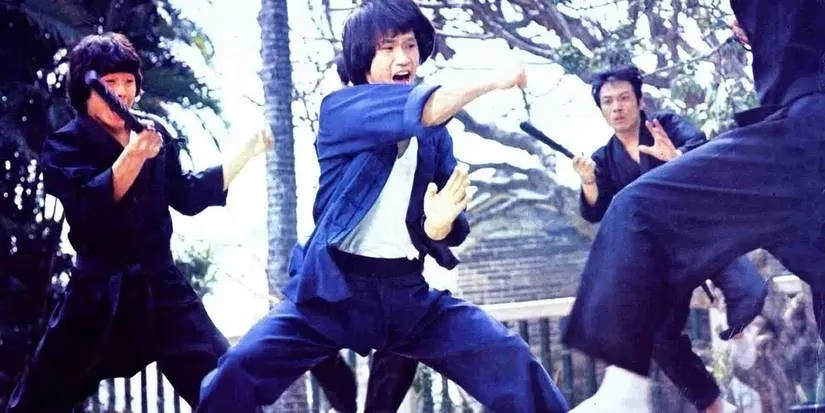
Legend of the Fist: The Return of Chen Zhen (2010) – Donnie Yen’s Superhero Spin
By the 2000s, the Bruceploitation wave had long subsided, replaced by lavish co‑productions with A‑list stars. Donnie Yen, already a regional icon, stepped into the shoes of Chen Zhen in Legend of the Fist: The Return of Chen Zhen, a sequel to Jet Li’s 1994 remake Fist of Legend. The story imagines that Chen Zhen faked his death at the end of the earlier film and has spent years abroad, only to return to 1920s Shanghai as a masked vigilante battling Imperial Japanese forces and western espionage. The film, drenched in noir‑ish lighting and comic‑book aesthetics, often feels more like a period superhero yarn than a traditional kung fu movie. Donnie Yen brings his characteristic whip‑quick kicks and silky footwork to a series of impressive set pieces, including a standout brawl in a rain‑slicked street. Despite occasionally losing the emotional core that defined the original Fist of Fury, Legend of the Fist remains a stylish, ambitious take on the Chen Zhen mythos—proof that the character can thrive far beyond the 1970s.
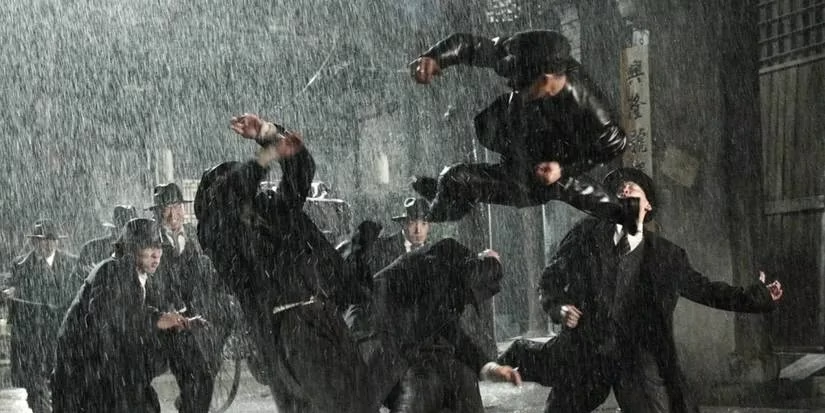
Fist of Fury Part II (1977) – Bruce Li’s Standout Sequel
Among the avalanche of Bruce‑themed cash‑ins, Fist of Fury Part II stands tall as arguably the best of the Bruceploitation era. Directed by the talented Lee Tso‑nam and starring Bruce Li (not to be confused with Jet Li), the film picks up shortly after the events of the 1972 classic, with a new hero rising to continue the fight against Japanese tyranny. What sets this sequel apart is its genuine care for character—brief quiet moments allow the protagonist’s grief and resolve to register—combined with blistering action choreography that honors the spirit of Bruce Lee without slavish imitation. Lo Lieh appears again, this time as a coolly menacing villain, and he steals every scene with a predatory stillness that erupts into explosive violence. The climactic showdowns are brimming with innovative blocking and crisp hand‑to‑hand exchanges. For those dismissive of Bruceploitation, Fist of Fury Part II offers a compelling counter‑argument: when made with passion and skill, these films could transcend their imitative origins.
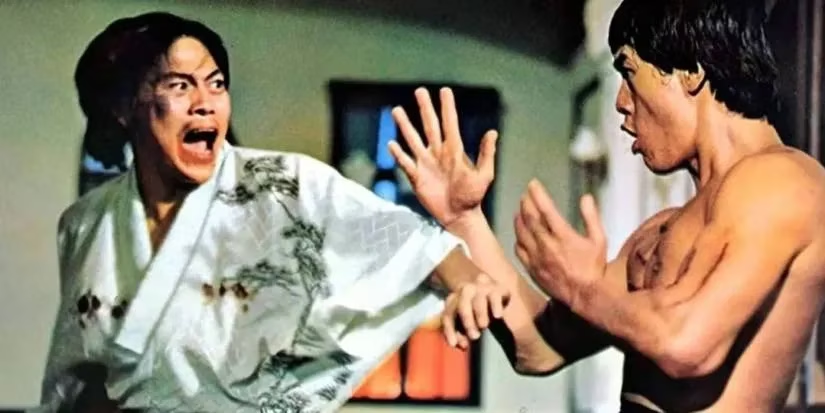
Fist of Legend (1994) – The Definitive Remake
If any remake has managed to step out of Bruce Lee’s shadow and stand as a masterpiece in its own right, it is Jet Li’s Fist of Legend. By 1994, the genre had fully moved beyond Bruceploitation, and director Gordon Chan, alongside action choreographer Yuen Woo‑ping, crafted a version of Chen Zhen’s story that honors the original while forging a deeper, more nuanced narrative. Jet Li plays Chen Zhen not as a clone of Lee but as a thinking man’s warrior—intellectual, compassionate, yet devastating in combat. The film explores themes of nationalism, racism, and personal honor with a maturity rare in martial arts cinema. Knowing the tragic fate of Bruce Lee’s Chen Zhen hangs over every scene, building unbearable tension toward the frenzied finale. The action is a breathtaking showcase of Li’s wushu agility and Yuen Woo‑ping’s inventive wire‑free choreography: the iconic dojo fight, the face‑off with General Fujita, and the blindfolded training sequence are etched into the memories of genre fans worldwide. More than three decades later, Fist of Legend is not merely a worthy successor—it is widely regarded as one of the greatest martial arts films ever made, a testament to how faithfully reimagining a classic can yield timeless results.
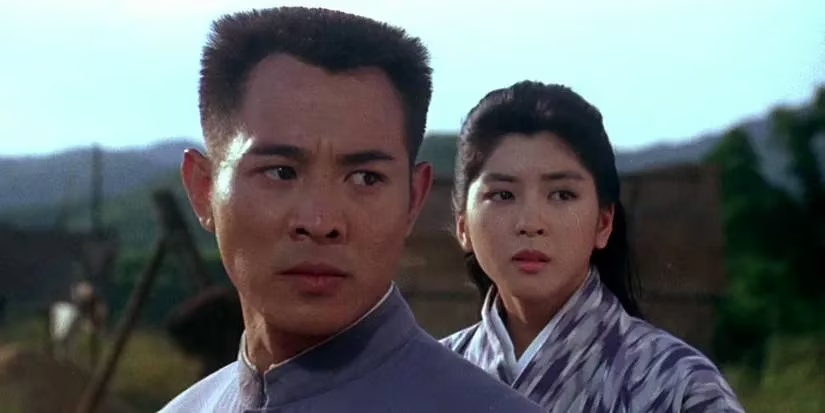
From the bizarre footnote of The Big Boss Part II to the towering achievement of Fist of Legend, the extended universe of Bruce Lee’s films reveals an enduring fascination with his icon. The missteps highlight the impossibility of cloning charisma, while the triumphs remind us that great characters like Chen Zhen can inspire generation after generation. As 2026 continues to celebrate martial arts cinema, these films—whether loved or laughed at—form an essential chapter in the ongoing legend of the Little Dragon.