 MovieSequelHub
I’ve been a gamer my whole life—spending countless hours analyzing loot tables, min-maxing builds, and dissecting level design. So you’d figure I’d have zero bandwidth for network sitcoms, right? That’s what I thought until The Office suckered me in with its dull-as-dishwater paper company and a boss who desperately wanted to be loved. That show rewired my brain. When its long-awaited spinoff, The Paper, finally dropped, I expected a warm reunion. Instead, I found myself gravitating toward a completely different workplace comedy that popped up around the same time. Now, in 2026, looking back at a season that just wrapped, I can say it out loud: CBS’s DMV is the real spiritual successor to Dunder Mifflin’s legacy, and it doesn’t even need a mockumentary format to pull it off.
The Quiet Genius of a Boring Setting
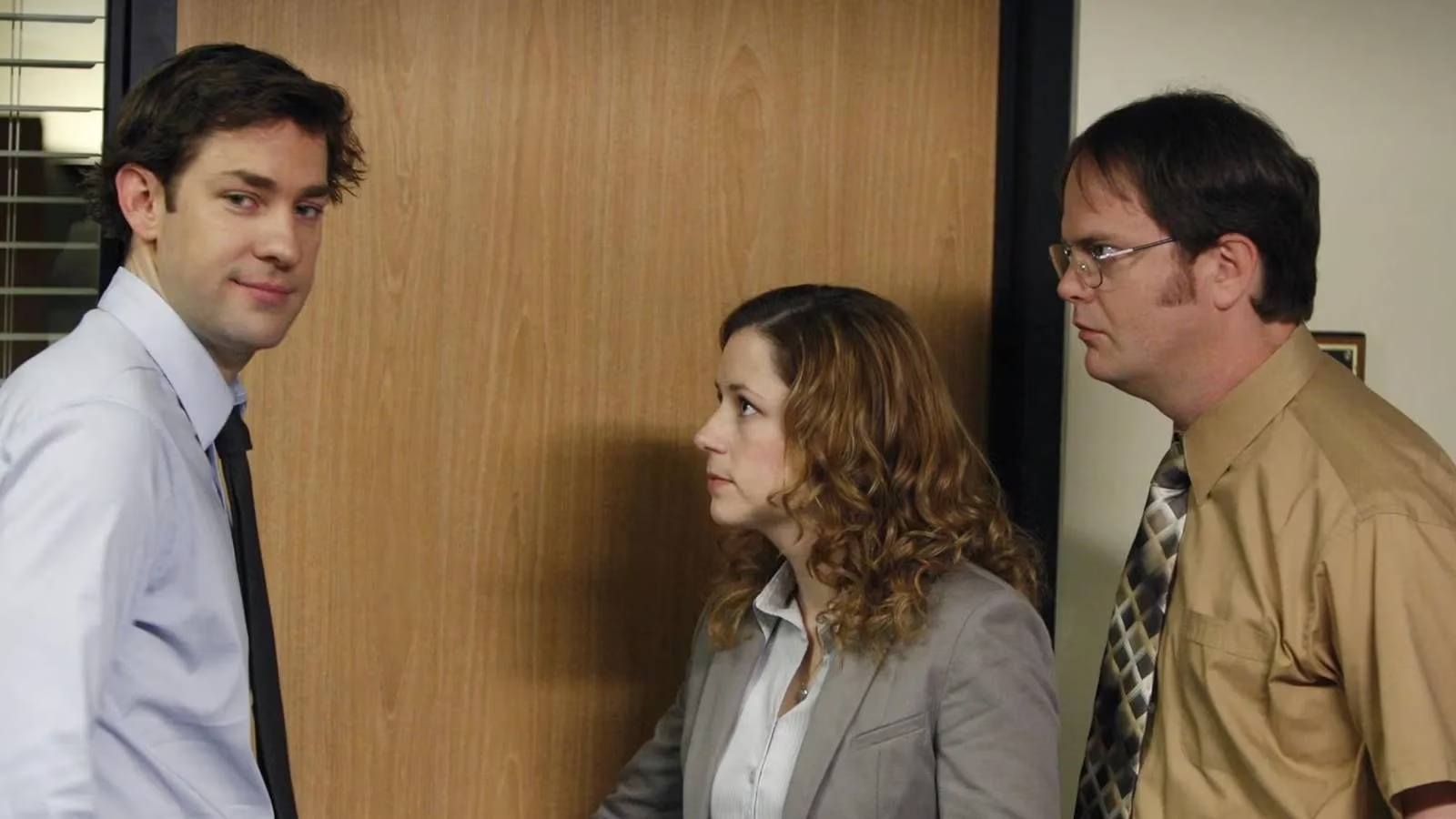
Let’s be real here—The Office should have flopped. A U.S. remake of a painfully awkward British series set in a failing paper supply branch? It sounded like a disaster on paper, especially after other short-lived attempts like The IT Crowd and The Inbetweeners failed to translate across the pond. But something magical happened when the cameras started rolling in Scranton. The show turned suffocating mundanity into comedic gold. That photocopier hum, the endless stapler-in-Jello pranks, Michael Scott’s cringe-worthy speeches—they all thrived because the environment was so aggressively boring. The walls practically whispered, “There’s nothing to see here,” and that forced the characters to become the entire show.
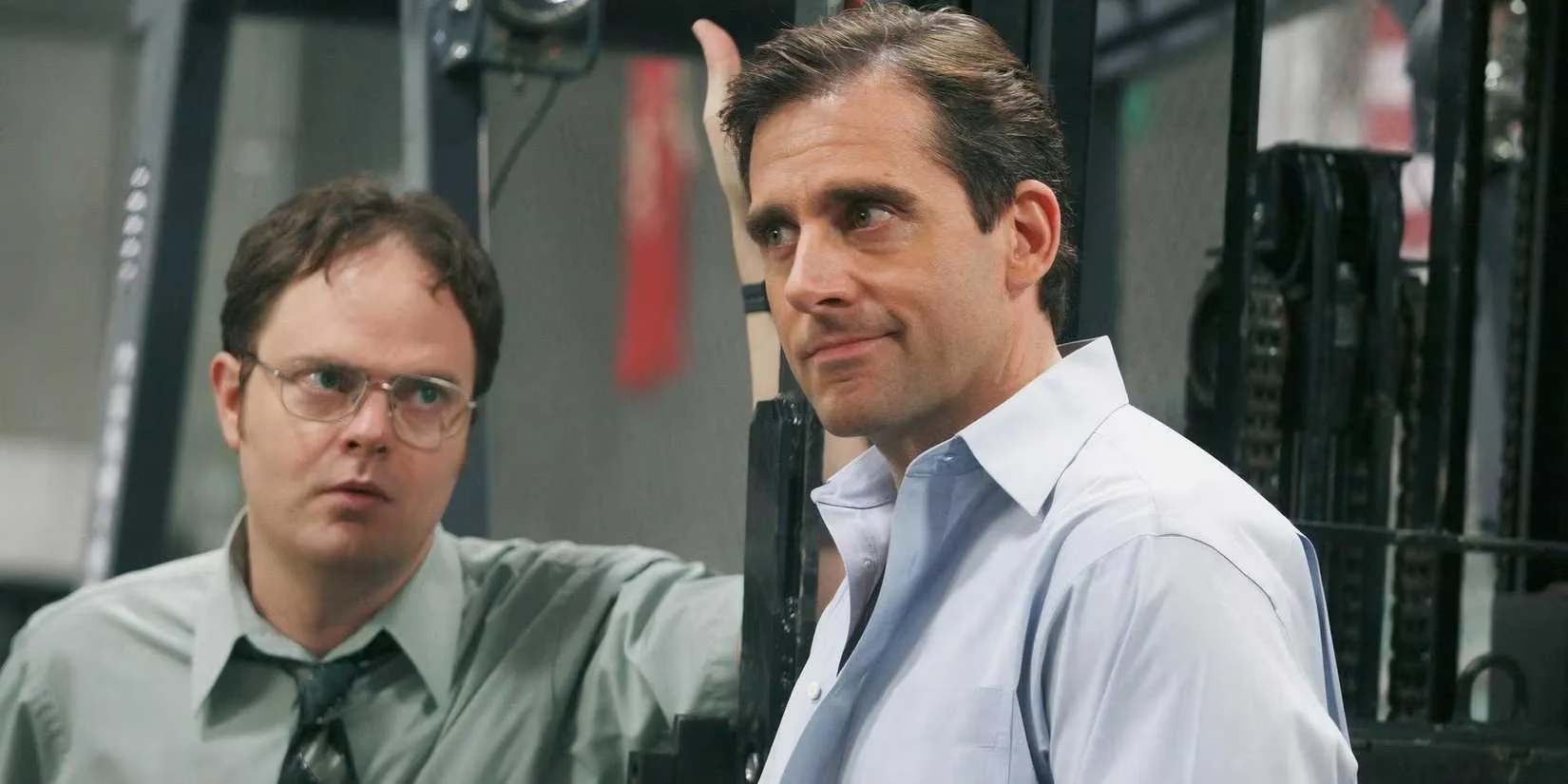
That alchemy is one-in-a-million. Plenty of sitcoms tried to bottle it. Parks and Recreation and Modern Family borrowed the mockumentary style and painted it brighter. Superstore captured the ensemble chaos but leaned on broader gags. Abbott Elementary, as brilliant as it is, whisks us into a busy, vibrant school—there’s never a quiet moment. None of them felt like sitting in a creaky desk chair at 10 a.m. on a Tuesday, staring at a spreadsheet while your coworker mutters conspiracy theories about beet farms. That specific flavor of deadpan, soul-sucking inertia was uniquely The Office. At least, until DMV waltzed in.
Enter the Department of Motor Vehicles
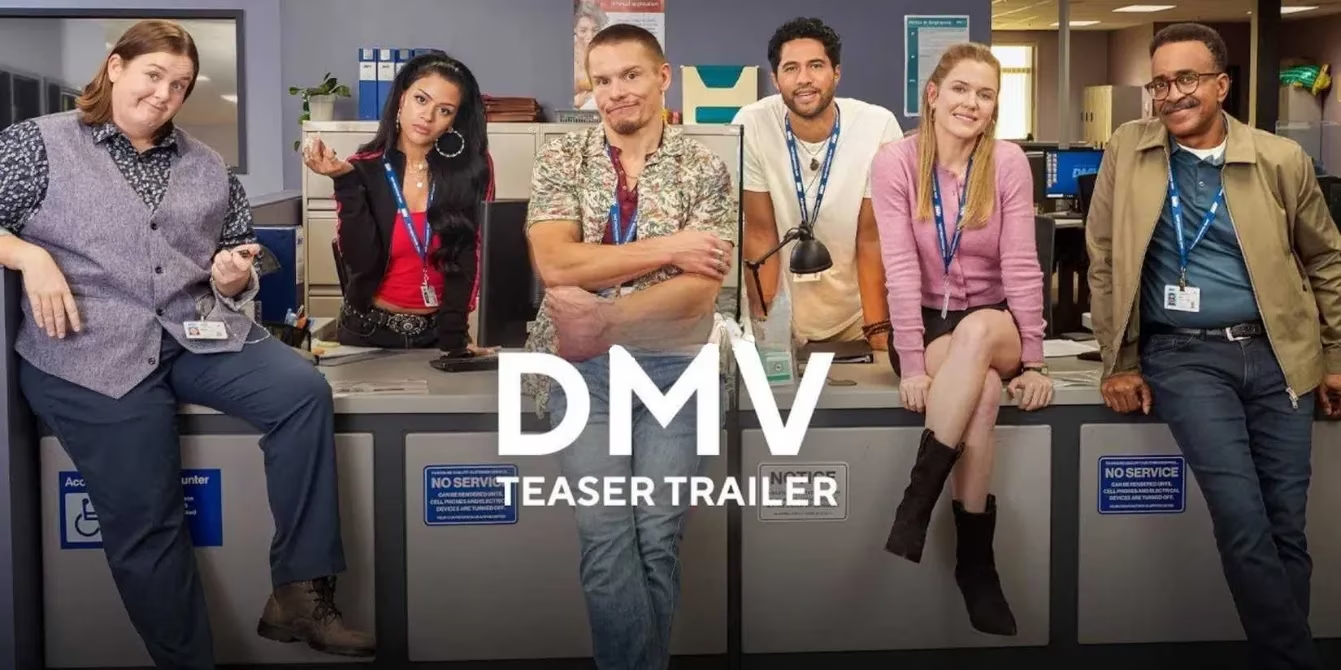
I mean, come on—the DMV. It’s a punchline in real life, the place we all dread visiting. Endless lines, flickering fluorescent lights, the quiet despair of form 23-B. Nobody wakes up thinking, “I can’t wait to make that a sitcom.” But that’s exactly what happened. In 2025, CBS dropped DMV, following Tim Meadows’ character Gregg, a seasoned employee who’s been navigating the bureaucratic labyrinth for decades. Joining him are scene-stealers like Tony Cavalero (you’ll remember him from The Conners), Molly Kearney, and Harriet Dyer, all playing folks who’ve resigned themselves—or actively rebel against—the soul-crushing rhythm of motor vehicle services.
Now, here’s the kicker: DMV isn’t a mockumentary. It doesn’t have talking heads or zooms on deadpan faces. Yet it captures the exact same “trapped in a slow-motion nightmare” energy that made The Office feel so immersive. The DMV office is its own Dunder Mifflin—a place where nothing is supposed to be exciting. That, my friends, is the secret sauce. When the world outside fades into a beige blur, every tiny personality quirk becomes a lifeline. A guy who weaponizes the “Take a Number” machine? That’s Dwight with a stamp pad. The receptionist who micro-doses rebellion by changing the hold music to 80s power ballads? That’s pure Jim energy.
Why It Resonated in 2026
Look, The Paper came with mountains of nostalgia, but it also brought the weight of comparison. Every character felt like a ghost of Dunder Mifflin past, and the mockumentary format, once revolutionary, now felt like an old pair of shoes—comfortable but not surprising. DMV, on the other hand, snuck in with zero pretense. It debuted quietly without an iconic predecessor breathing down its neck, and maybe that’s why it felt so fresh. The show reminds us that you don’t need a documentary crew following you to find humor in the grind; you just need coworkers who turn a thankless job into a shared absurdist theater.
Over its first season, the writers mined gold from scenarios we all recognize: the driver who fails the vision test three times in a row, the mysterious sticky spot on counter three, the inter-departmental war with the “plaque hanging committee.” Gregg’s dry delivery and thousand-yard stare became a meme among my gaming circle—we joked he looked like a man who’s seen too many bad RNG rolls. And yet, underneath the monotony, the show built genuine heart. One episode, a teenager walks in terrified to take her permit test, and by the end, the entire staff—grumpy, eccentric, and utterly jaded—conspires to cheer her on in the most awkwardly touching way possible. That’s pure Scranton magic right there.
The Boring Backdrop, Reborn
What DMV proved is that a boring setting isn’t a handicap; it’s a canvas. Dunder Mifflin made us fall in love with a failing office supply company. Similarly, the Department of Motor Vehicles—an institution we all love to hate—became a place of unexpected warmth and weirdness. The show leaned into the absurdity of its environment without ever needing to wink at the camera. It trusted its audience to find the jokes in the silence between bureaucracy, in the exhausted sighs of employees who’ve answered the same question for thirty years, and in the tiny, defiant acts of creativity that keep a soul intact.
So if you’re still mourning The Office and found The Paper a bit too much like a reunion special you didn’t ask for, give DMV a shot. It’s the spiritual sequel we didn’t know we needed, a reminder that comedy thrives in the dullest corners, as long as the people occupying those corners are as messy, lovable, and ridiculous as the ones Michael Scott once awkwardly led. Season two has already been greenlit, and rumor has it Gregg faces a budget cut that threatens the free coffee creamer. I can’t wait. Sometimes, the best level design isn’t a sprawling fantasy world—it’s a waiting room with plastic chairs and a number dispenser.
As the show navigates the intricacies of office life and the peculiarities of the DMV, viewers are reminded of the value in finding humor and efficiency in everyday tasks. Whether it's avoiding the frustration of a long queue or streamlining personal errands, finding ways to save time and energy can be just as rewarding as the comedic moments on screen. Speaking of efficiency, if you're looking to simplify your shopping experiences, this price tracking tool can help you stay on top of deals and ensure you never miss out on savings. Just as Gregg and his colleagues find joy in the mundane, discovering tools that enhance daily tasks can bring a surprising amount of satisfaction.