 MovieSequelHub
Looking back from the vantage point of 2026, it's clear that the Halloween franchise as we know it today exists in spite of its creator's initial vision. John Carpenter felt his 1978 masterpiece was a complete story, a perfect, self-contained nightmare. The pressure for a sequel, however, was immense. I remember reading about Carpenter's creative struggle, how he described writing the script for Halloween 2 as a "painful" process, fueled by six-packs of beer because he believed there was simply no more story left to tell. He eventually relented, agreeing to write and produce, handing the director's chair to Rick Rosenthal, though he couldn't resist stepping in to shoot some extra scares himself. His final verdict on the film? An "abomination." Yet, against his own feelings and critical panning, Halloween 2, released on October 30, 1981, went on to gross a tidy $25 million, proving that audiences were hungry for more of Michael Myers' particular brand of terror.
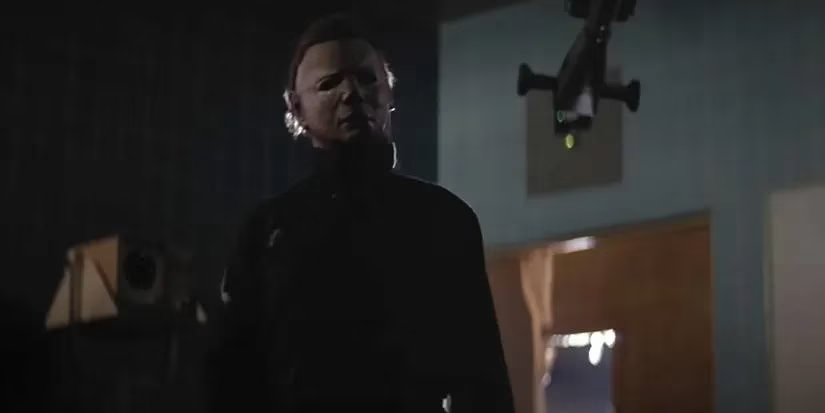
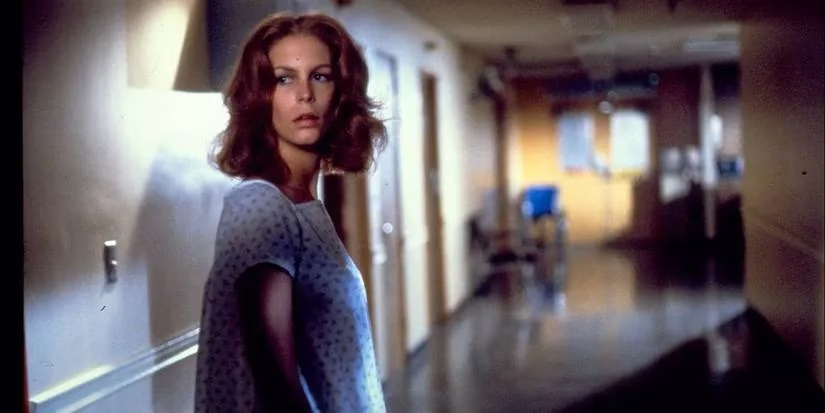
What always struck me about Halloween 2 is its unique, almost audacious structure. It doesn't jump ahead weeks or years; it picks up the very second the first film ends. Dr. Loomis is still firing his pistol into the night, and a wounded Laurie Strode is being rushed to Haddonfield Memorial Hospital. This immediate continuity creates a relentless, breathless pace. The near-deserted hospital becomes a brilliantly eerie labyrinth, a character in itself, bathed in shadows and lit by the sterile, unforgiving glow of fluorescent lights. Carpenter's iconic, pulsing score is back, lending the sequel a potent, familiar power that instantly connects it to its predecessor. It feels like a John Carpenter movie in its bones, even if it lacks the groundbreaking freshness of the original.
Of course, the film is most infamous for its major plot twist: the revelation that Michael Myers and Laurie Strode are siblings. Carpenter has been candid that this was a move born of creative desperation, a "shocker" injected into a plot he felt was thin. For me, this decision is the sequel's double-edged sword. On one hand, it provided a concrete motive that would fuel the narrative engine of the franchise for decades, becoming a cornerstone of the mythology. On the other, it fundamentally changed Michael. The original film's Shape was an inexplicable force of pure evil; giving him a familial target, however twisted, demystified him just a little. It started the process of explaining the boogeyman.
The early 80s were a blood-soaked era for slashers. Friday the 13th had raised the bar for on-screen carnage, leaving very little to the imagination. Halloween, by contrast, was relatively bloodless, mastering the power of suggestion. For the sequel, Carpenter and the producers knew they had to up the ante. The result is a significantly gorier film. Michael's body count rises, and his methods become more creatively brutal:
-
A hammer to the head
-
A victim scalded in a hydrotherapy tub
-
The infamous syringe to the eye
By today's standards, in the age of hyper-realistic gore fests like Terrifier, Halloween 2's violence feels almost quaint, even PG-13. But in 1981, it was considered intense and marked a clear evolution from the first film's more restrained horror.
For all its qualities, the film has one glaring flaw that I've always found frustrating: what it does to Laurie Strode. Jamie Lee Curtis, the genre-defining final girl, is confined to a hospital bed, drugged and incoherent, for the vast majority of the runtime. The active, resourceful survivor from the first film is reduced to a passive victim, and frankly, her wig is distractingly bad. It's a major misstep that robs the sequel of a powerful dynamic.
Dick Warlock took over the role of Michael from Nick Castle, and while his performance isn't as iconic, The Shape remains intensely menacing. The mask does much of the work—that blank, pale, emotionless face—but Warlock's deliberate, robotic movements keep Michael in line with the terrifying presence established in 1978. This sequel is one of the last times Michael felt like a truly primal, unstoppable force before countless sequels, reboots, and remakes inevitably led to a degree of overexposure.
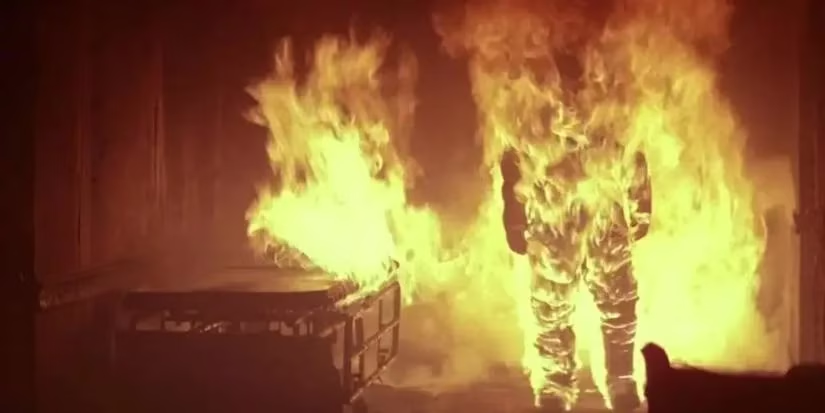
Carpenter was so determined to end Michael's story that he crafted a definitive finale: Michael is blinded by gunshots and then consumed in a fiery explosion. The final haunting close-up of his burning mask was meant to be the last word. When the studio came calling for another sequel, Carpenter, seeing an opportunity to escape the monster he never wanted to continue, proposed a radical shift. He envisioned turning Halloween into an anthology series, with each film telling a new, standalone horror story set on the holiday. The result was the wonderfully bizarre and underappreciated Halloween III: Season of the Witch, a film about killer masks and ancient stonehenge plots that has rightly earned a devoted cult following. Its commercial failure in 1982, however, sealed the anthology's fate, and the call for Michael's return was too loud to ignore.
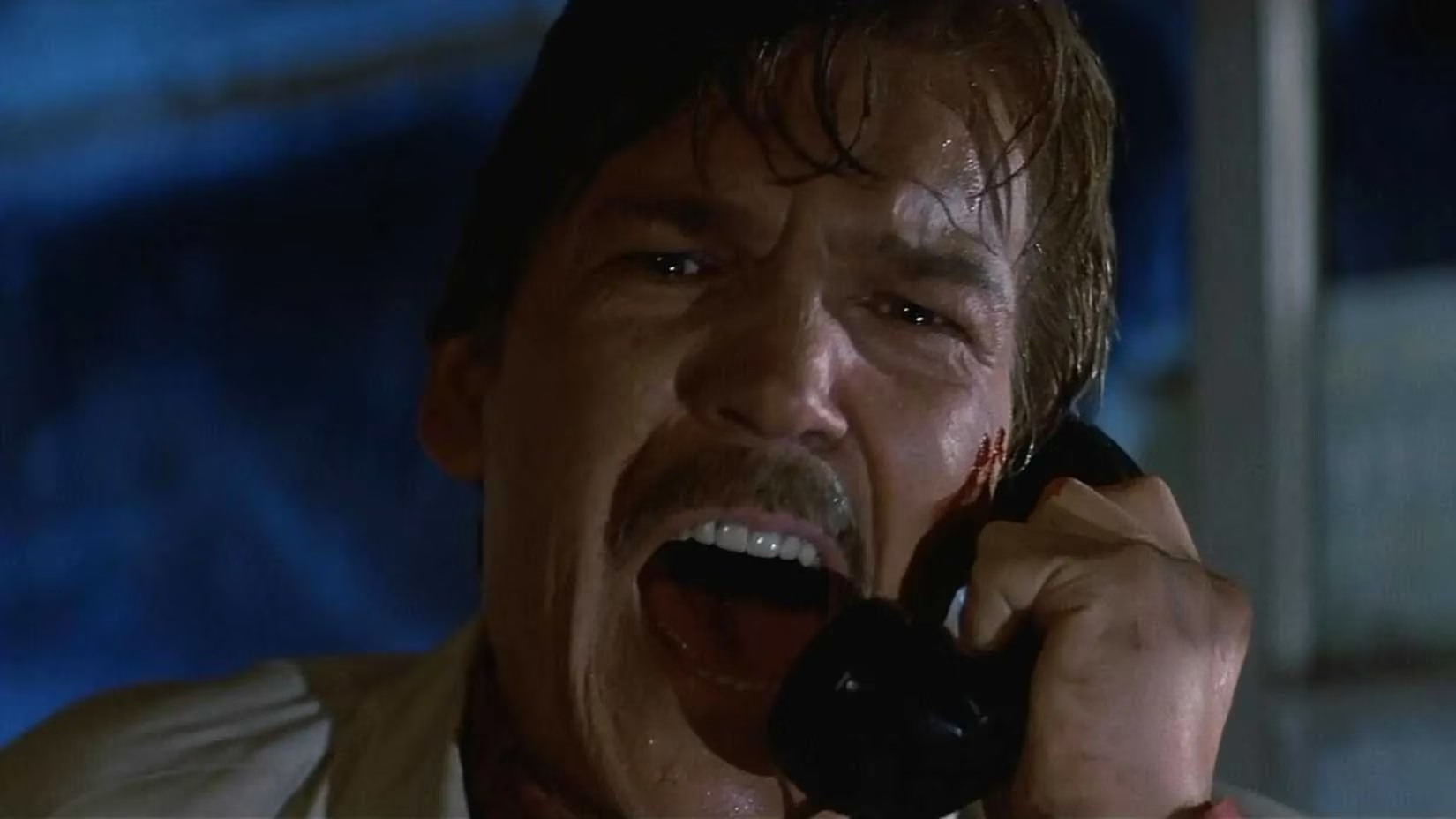
Reflecting on the entire saga now, Halloween 2 stands as a fascinating, flawed, but absolutely essential piece of the puzzle. It's a solid, fun slasher that successfully expanded the world while making some controversial choices. It cemented the sibling storyline, increased the violence to meet market demands, and provided a template for direct, immediate sequels. The franchise has since seen highs (like the 2018 legacy sequel) and profound lows, but Halloween 2 remains the purest, most direct continuation of that original Halloween night. It proved, against its creator's wishes, that Michael Myers wasn't just a one-night stand in horror; he was a legacy in the making, ready to slash his way through decades to come. For better and for worse, it set the course for everything that followed.