 MovieSequelHub
As a lifelong gamer and Western aficionado, I’ve always been drawn to epic sagas that unfold like a sprawling open-world campaign. Kevin Costner's Horizon: An American Saga felt exactly like that: a grand, risky project he poured his heart and millions of his own dollars into, determined to give us a cinematic experience that charts America’s bloody coming-of-age. Here in 2026, however, that saga remains frustratingly frozen in time, and I’ve found myself turning to a surprising alternative—a Civil War espionage miniseries that Costner produced but didn’t star in.
Horizon: An American Saga – Chapter 1 bombed hard in 2024. It pains me to say that, because the ambition was breathtaking. Costner had carried this idea since the 1980s, left Yellowstone under messy circumstances, and even risked his own fortune to get the first two films made. Yet the box office numbers were brutal, and the planned release of Chapter 2 just a few months later was pulled. Fast forward to 2026, and that completed second chapter has only ever seen the inside of film festival screening rooms. The silence around Chapters 2 and 3 has become deafening.
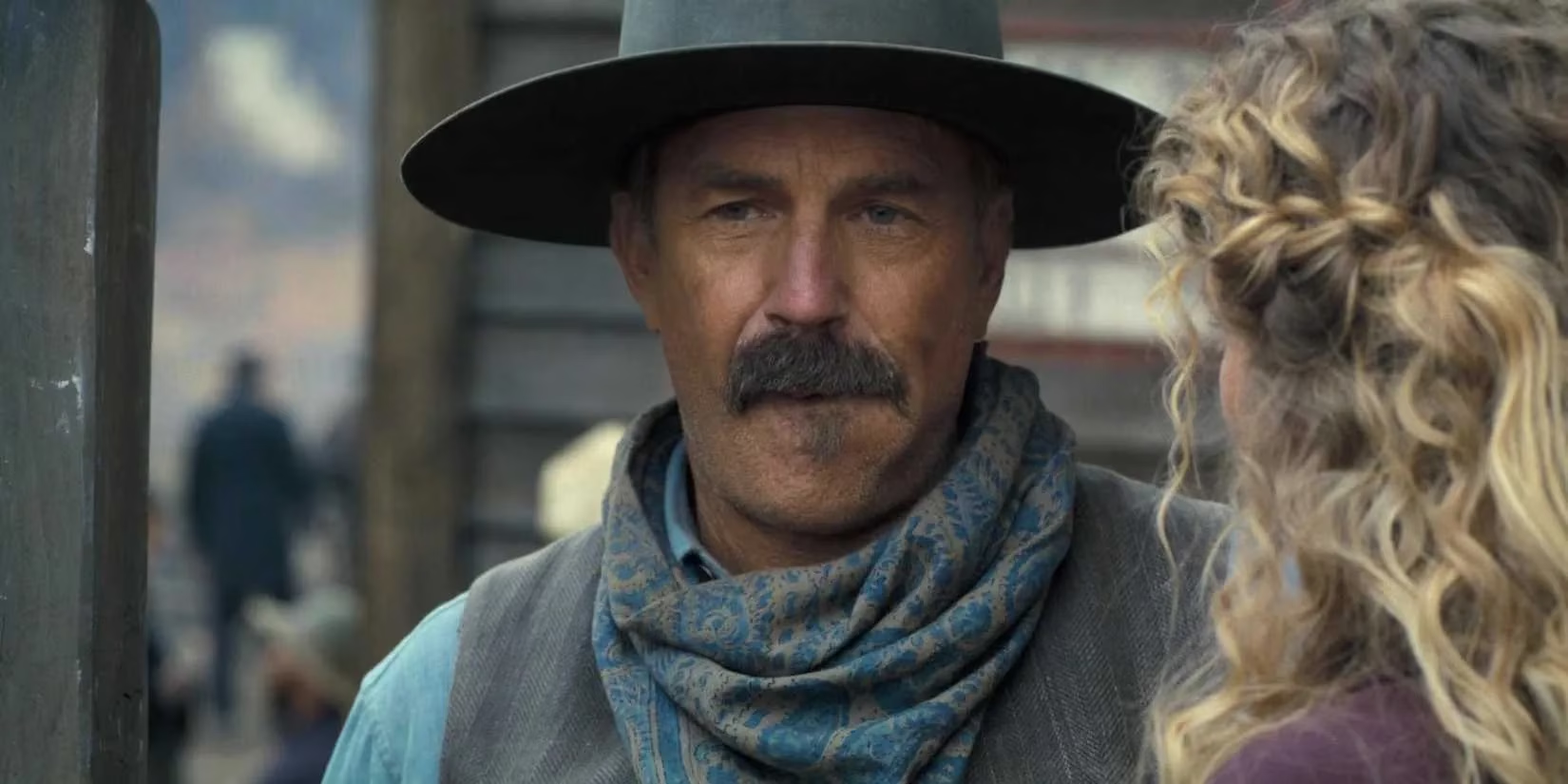
Don’t get me wrong—Costner hasn’t given up. The man still dreams of releasing Horizon as a massive theatrical event, not a streaming dump. The upside of the long delay is that audiences have had time to catch up on Chapter 1 on home video and streaming, and the appetite for Chapter 2 has definitely grown. Streamers have reportedly approached him with offers to fund the remaining installments, but he’s holding out for the big screen. I respect that stubbornness. It’s the same quality that makes his best Westerns—Dances with Wolves, Open Range—feel so personal. But economic reality is a harsh mistress. Pieces of Chapter 3 were filmed, and Chapter 2 is in the can, so it will come out someday. Whether we ever get the full four-chapter vision, though, is a question mark that keeps me up at night.
While the Horizon stalemate dragged on, Costner quietly poured his historical obsession into a different vessel: The Gray House. This six-episode miniseries dropped on streaming earlier this year, and I devoured it in a single weekend. What makes it so fascinating? It’s a Western by way of a spy thriller, and it covers thematic ground that Costner clearly wanted to explore in his Horizon saga.
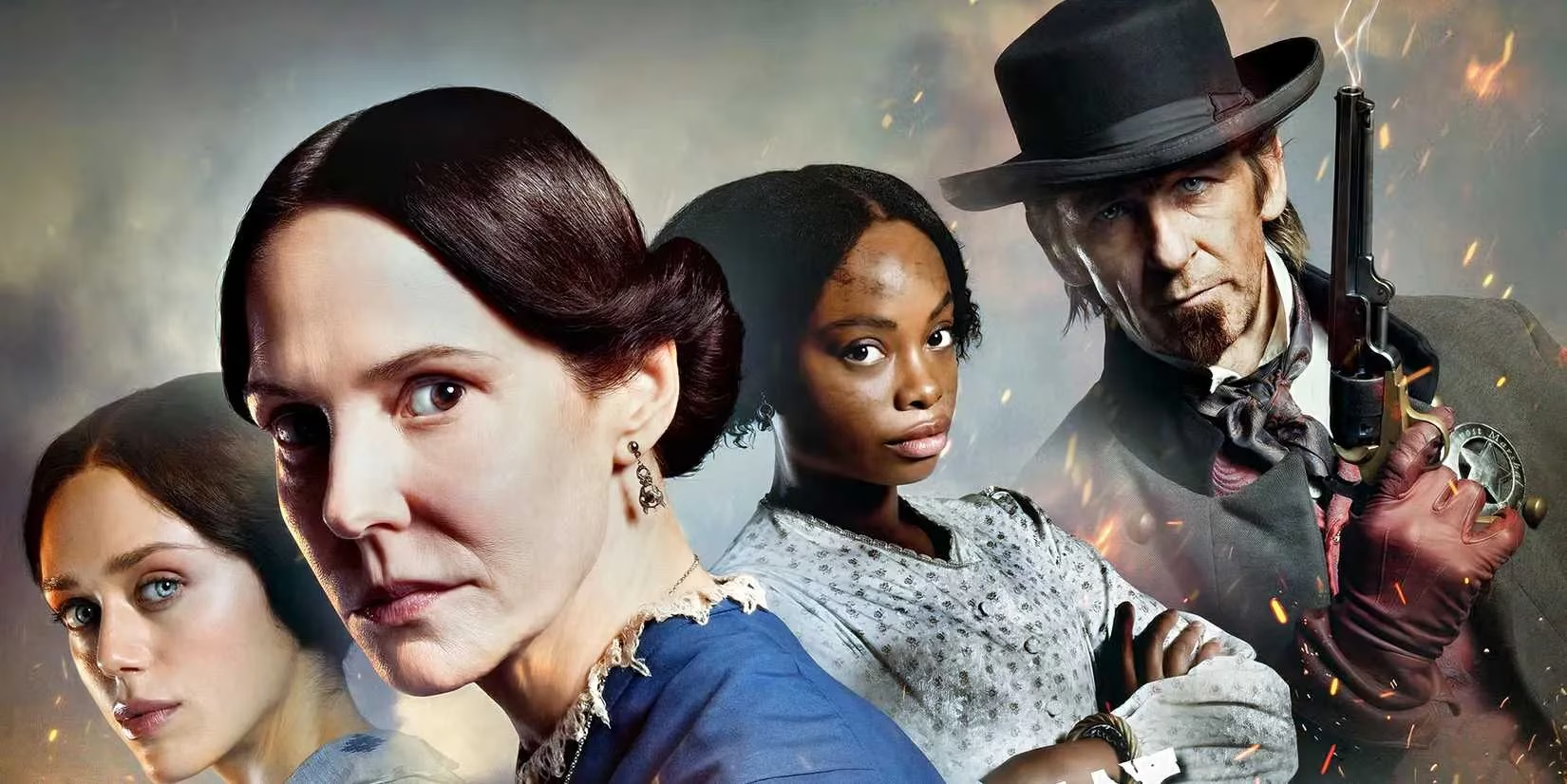
The Gray House is inspired by a true story that feels almost too cinematic to be real: during the Civil War, a network of women—led by Elizabeth Van Lew—built an underground spy ring to infiltrate the Confederacy. Mary-Louise Parker, Daisy Head, and Amethyst Davis headline the cast with a steely energy that redefines what a Western protagonist looks like. Costner doesn’t appear on screen, but his fingerprints are all over the production. He’s not the type to just cash a check; he shapes the creative direction. And you can feel it in every frame.
The Civil War setting links The Gray House directly to the Horizon films. Both stories use that national fracture as a backdrop to examine America’s identity—the violence, the ugliness, the messy evolution. In Horizon, Costner wanted to show the bloody growing pains of a nation expanding westward. In The Gray House, we see the same conflict from the shadows, through coded messages, betrayal, and moral ambiguity. It’s espionage instead of gunfights, but the soul is the same. Honestly, as a gamer, I kept thinking about how easily this could be turned into a narrative-driven stealth game like Desperados III or a Dishonored-style immersive sim—and that’s the highest compliment I can give.
The concept alone sets The Gray House apart from every other Western I’ve watched. There are no noble cowboys righting wrongs here. Instead, you get tension simmering in drawing rooms, invisible battle lines, and women using society’s underestimation of them as their deadliest weapon. The miniseries format gives it room to breathe, letting the character dynamics simmer before boiling over. It’s not just a costume drama; it’s a thriller that reminds you how fragile the Union really was.
Costner might be using this project to scratch an itch he couldn’t reach with Horizon. That saga was meant to chart a key stage in America’s evolution, and the miniseries explores similar themes from a completely different angle—one that’s about internal betrayal as much as external war. It’s the same conversation, just whispered instead of shouted across the plains.
What does all this mean for the Horizon sequels? I’m cautiously hopeful. The Gray House proves that audiences are still hungry for smart, character-driven historical fiction, even if it doesn’t come with sweeping vistas and orchestral swells. Costner’s passion project might eventually find a hybrid release strategy—limited theatrical run followed by a streaming home—and the positive reception to this miniseries could give him the leverage he needs. A stalemate isn’t a death sentence. In the meantime, The Gray House stands on its own as a gem that blends two genres I never expected to see fused so elegantly. If you, like me, have been waiting for the Horizon story to continue, don’t sleep on this one. It’s the closest we’ll get to Costner’s vision for a while, and honestly, it’s a damn good substitute.