 MovieSequelHub
The rain on the rooftops of Gotham tonight feels like the same rain from 1989. It carries the same chill, the same promise of shadows, and the same faint, metallic scent of a city perpetually on the edge. As I hold this new volume, Batman: Revolution, released just this year in 2026, it doesn't feel like I'm reading a sequel. It feels like I'm returning to a half-remembered dream, a gothic melody that was left hanging in the air four decades ago, now finding its next, haunting note. Tim Burton's vision was never just a film; it was a mood, a world carved from shadows and angular despair. To step back into it now, through the pages of a novel, is to confront a ghost—the ghost of what the Batman mythos could have been.
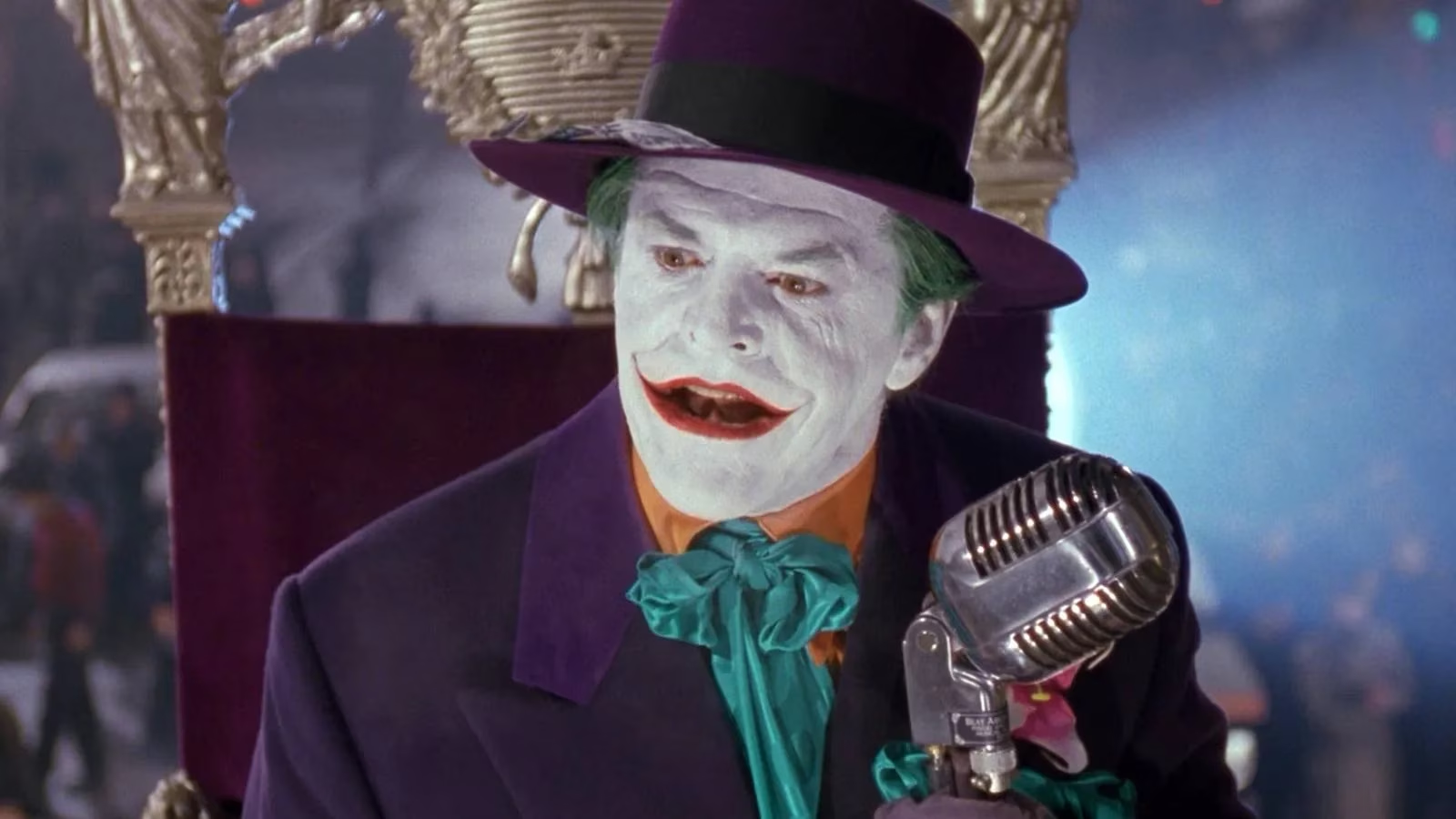
The genius of Batman: Revolution, and its predecessor Batman: Resurrection from 2024, lies not in looking forward, but in delving deeper into the cracks between the films we thought we knew. They nestle themselves between Batman and Batman Returns, not as replacements, but as expansions. They are the whispered conversations in the alleyways, the schemes hatched in the asylum's silence, the psychological wounds that festered just off-screen. Resurrection played a macabre game with the Joker's legacy, a phantom pain orchestrated by Hugo Strange and Clayface. It was a story about how chaos, once unleashed, can never truly be buried. But Revolution... Revolution is a different kind of storm.
It is a cerebral, chilling wind that begins not with a bang, but with a riddle whispered in a library. The book takes the seeds sown for the Riddler in Resurrection and cultivates them into something profoundly unsettling. We meet Norman Pinkus—a man of meticulous intellect, a collector of truths and trivia, whose early, almost quaint ambition to be called 'The Bookworm' is a tragically beautiful piece of foreshadowing. I followed his transformation not as a sudden descent into madness, but as a slow, logical corruption. His puzzles aren't mere games; they are critiques, philosophical traps designed to prove the world's inherent disorder. Facing him, the Batman of this world—still bearing the psychological weight of the Joker—is forced to battle not with fists, but with logic, in a duel where every solved riddle might just be part of a larger, more devastating question.
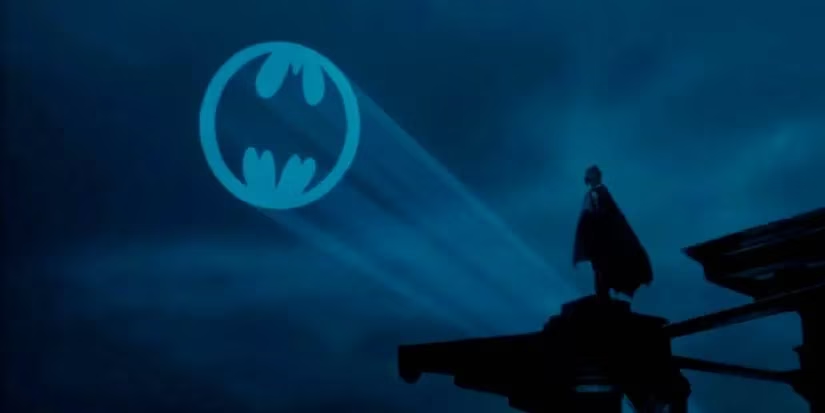
Yet, as with all things in Gotham, nothing is as simple as it seems. Just as Clayface was merely a tool in a grander scheme in Resurrection, the Riddler himself is revealed to be a single, brilliant piece in a sprawling puzzle. This narrative choice is what makes Revolution so enriching. It doesn't just add a villain; it deepens the entire ecosystem of Burton's Gotham. We see the gears of the city turning—the fear in the GCPD, the corruption festering in hallways untouched by the Bat-signal, the way one man's obsession can warp the reality around him. The book operates on multiple levels:
-
The Psychological Level: A deep dive into the mind of a nascent super-villain.
-
The Mythological Level: Expanding the rules and history of this specific Gotham.
-
The Nostalgic Level: Faithfully preserving the tactile, gothic texture of the 1989 film's universe.
And this, for me, is the poignant heart of the experience. Releasing a sequel decades later is an act of profound artistic archaeology. The chasm between the grim fairy tale of Burton's duology and the neon spectacle of Batman Forever and Batman & Robin has only grown wider with time. Batman: Revolution is a bridge across that chasm, not to the films that were, but to the darker, more consistent timeline that lived only in our imaginations. It asks, "What if?". What if the story had continued down its original, shadowy path?
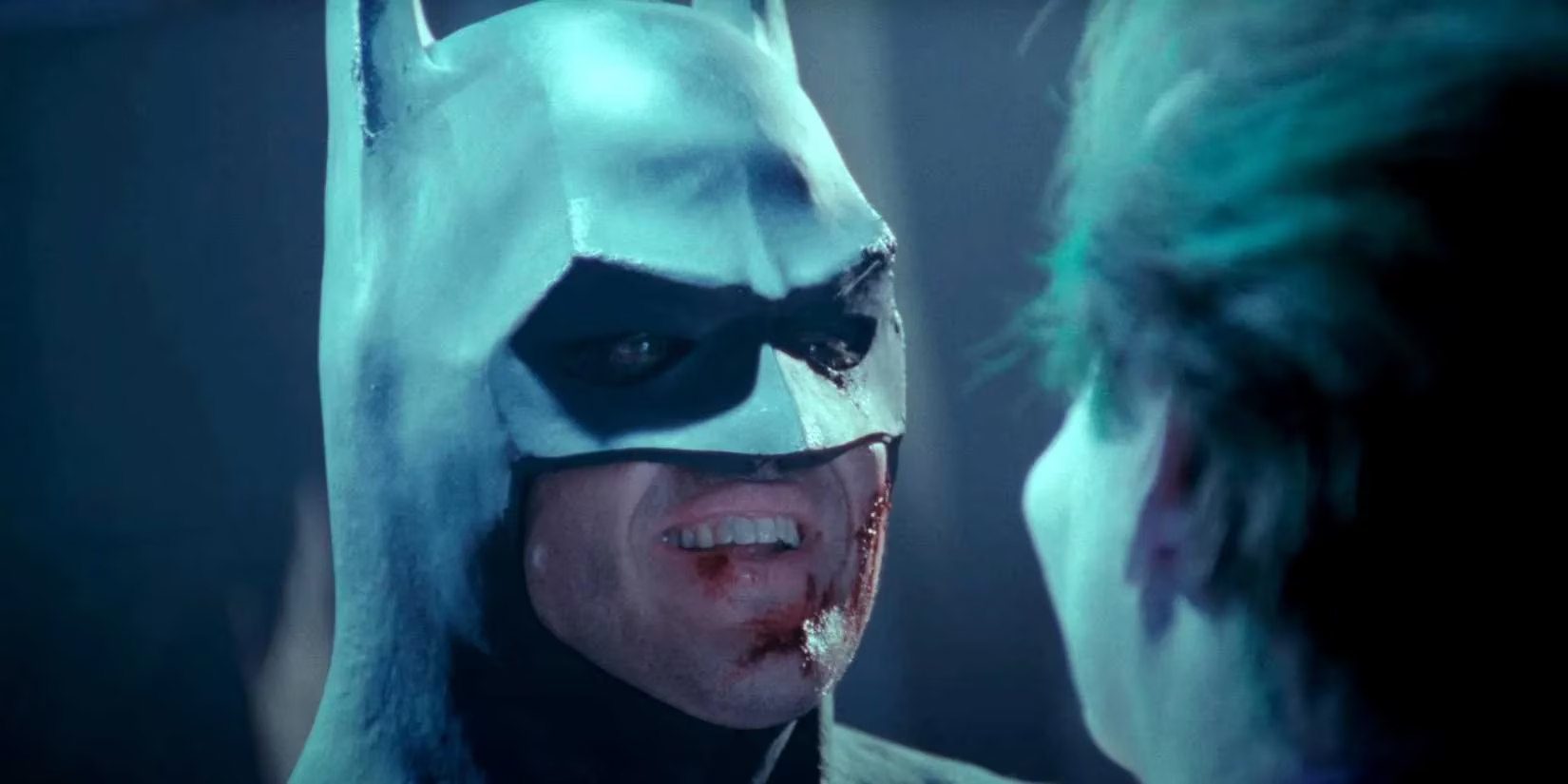
Is it canon? The question feels irrelevant beside the atmosphere it conjures. It exists in a beautiful state of quasi-canonicity—a "might-have-been" that feels more emotionally true to the original's spirit than some official continuations ever did. It treats the 1989 film not as a relic, but as a living, breathing foundation. Reading it, I am no longer just a player observing a story; I am a witness to an alternate history, one where the Bat-signal cuts through a rain that never stopped falling, where the ghosts of past battles (so vividly captured in the image of Batman and the Joker's confrontation) directly inform the conflicts of the present.
In the end, Batman: Revolution is more than a novel. It is a love letter to a specific, timeless vision of Batman. It is proof that a world built on such strong, gothic foundations can always support new stories, even forty years on. It understands that the most compelling sequels aren't always about moving forward, but about digging deeper, uncovering the secrets and sorrows we missed the first time around. As I turn the final page, the rain against my window seems to form a pattern, a final, unspoken riddle from the heart of Gotham itself. The revolution is not an explosion; it is a revelation, and in the silent spaces between the shadows, the Batman's symphony continues to play. 🦇