 MovieSequelHub
I still remember the day Jujutsu Kaisen ended. September 29, 2024 — that date is tattooed on my soul. The final chapter dropped, and for a moment, I just sat there staring at the screen, the weight of it all pressing down like a domain expansion I couldn't escape. Yuji's story, Gojo's sacrifice, the messy, beautiful world of cursed energy... it was over. Or so I thought. For months afterward, I felt like I'd lost an old friend. The kind of friend who'd been with me through thick and thin, who made me laugh, cry, and throw my phone across the room in sheer agony. I kept checking the Jump app out of habit, scrolling past the empty space where JJK used to live, and every time, that quiet ache would return. I wasn't ready to say goodbye. And honestly? Neither was the story.
Then, in early 2025, whispers started swirling through the fandom. I dismissed them at first — we'd been burned by rumors before. But when the official announcement hit, my heart nearly stopped. Gege Akutami was coming back. Not with a one-shot, not with a vague art book, but with a full-blown sequel manga set in the same universe. The title was cryptic: ≡ -Modulo-. It was slated to begin serialization on September 8, 2025, and would run for six months, spanning three volumes. I remember laughing out loud in my room, saying, "Gege-sensei, you absolute madman — you really can't let this go, can you?" That was the first spark of joy I'd felt in a long time.
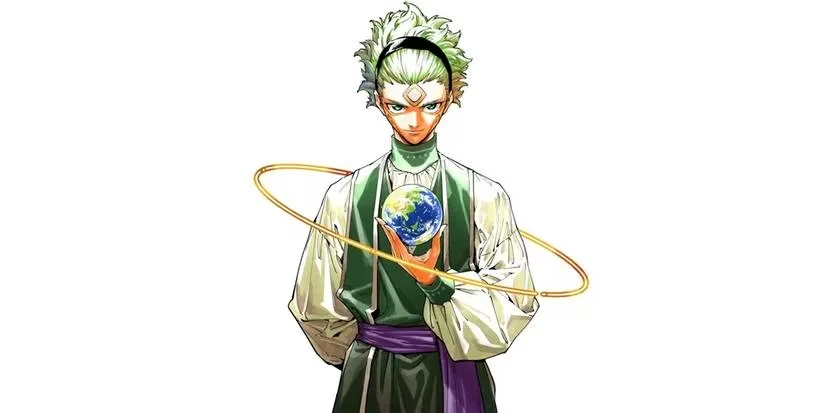
The day the first chapter arrived, I was practically vibrating. I'd cleared my schedule, stocked up on snacks, and settled into my reading chair like I was preparing for a ritual. The preview cut of the main character had already teased something bizarre — an almost sci-fi silhouette that looked nothing like the sorcerer uniforms we knew. And boy, was I in for a ride. The protagonist of ≡ -Modulo- strode onto the page like they'd walked straight out of a cyberpunk fever dream, their design a sharp departure from the gritty, supernatural aesthetic of old. Where Jujutsu Kaisen had clung to ancient onmyōji robes and cursed tools, this new kid felt like something from Evangelion — which makes sense, since Akutami has openly cited it as a major inspiration. It was a curveball, sure, but let me tell you, it hit different. The world of cursed energy suddenly collided with technology, birthing a curse-tech hybrid that sent my imagination into overdrive.
Reading those three volumes as they released over the next half-year was like reconnecting with that old friend... only to discover they'd gotten a wild makeover and learned a bunch of new tricks. The familiar underpinnings were still there: the horror of negative emotions, the fragile balance between sorcerers and civilians, the looming dread of something worse lurking just out of sight. But now there were neon-lit barriers, corrupted data-streams that behaved like modern-day shikigami, and a quiet, devastating question about what happens when the digital age learns to hate. Gege-sensei, you twisted genius. I'd be lying if I said I didn't cry at least twice.
Of course, I couldn't help but gnaw on all those unresolved threads from the JJK finale. The aftermath of Tengen's barrier collapse, the unchecked spread of sorcerers throughout Japan, the new generation hinted at through Yuta's descendants — the sequel didn't answer everything, but it opened doors I never even knew existed. And that spin-off novel written by horror author Hirayama Yumeaki? Pure icing on the nightmare cake. I grabbed that the moment it hit shelves, devouring its freshly translated pages in one sleepless night. There's nothing quite like seeing a world you love get reinterpreted through a master of atmospheric dread.
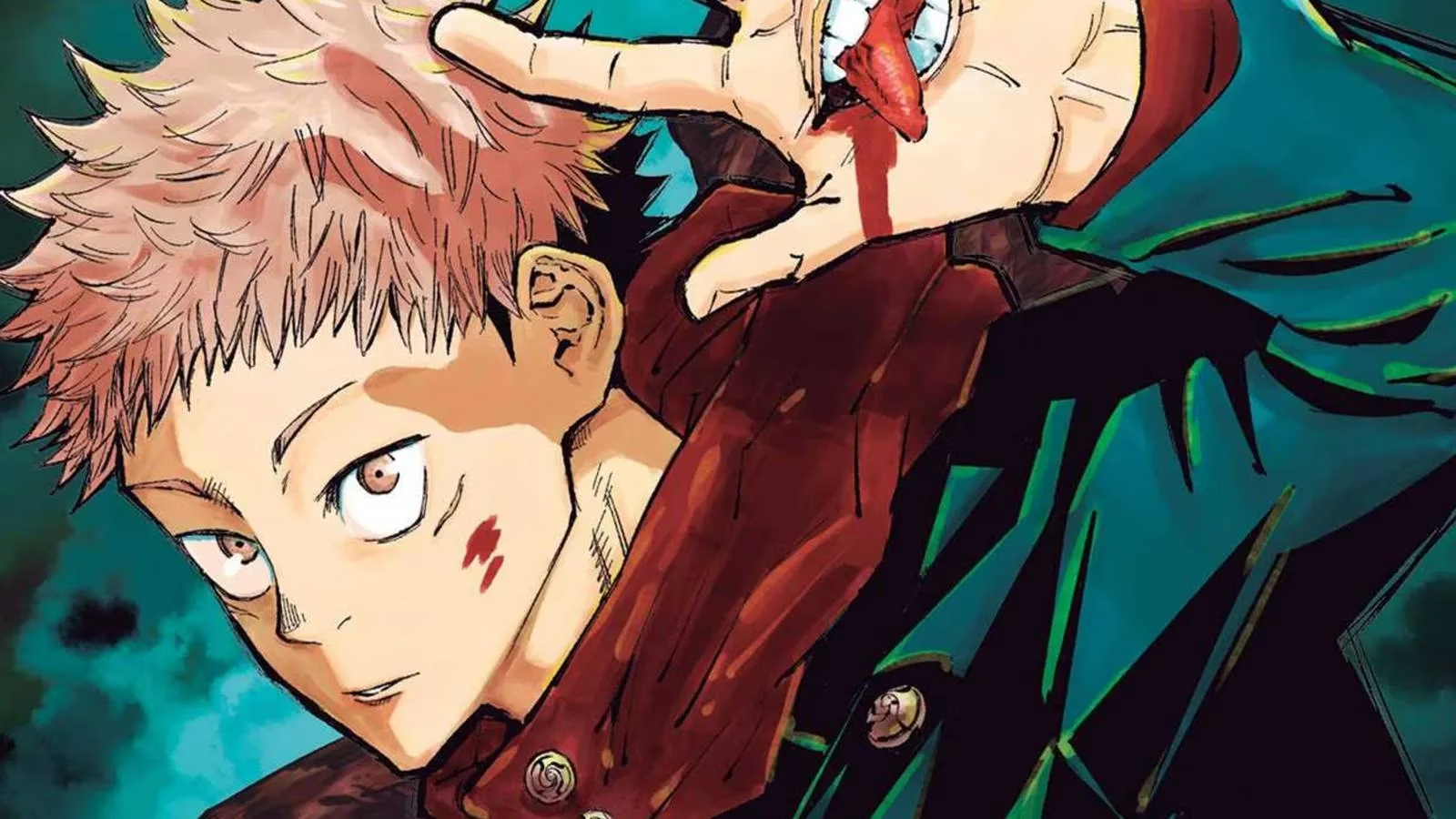
What made the whole experience even sweeter was the art. Yuji Iwasaki, known for Cipher Academy, took on the illustrating duties, and his style meshed with Akutami's world like they'd been partners for decades. The panels had a sleek, polished energy that somehow still carried the raw, visceral punch I'd fallen in love with in Shibuya and Shinjuku. When he posted that tribute artwork on his account to kick off serialization, I felt a surge of gratitude. This wasn't just a corporate cash grab; it was a labor of love from a team that clearly understood the assignment.
Now, sitting here in 2026, with all three volumes dog-eared on my shelf, I can't help but smile. Jujutsu Kaisen didn't really end — it just evolved. Like a cursed spirit feeding on our collective longing, it shape-shifted into something new and terrifying and utterly beautiful. Gege Akutami proved that sometimes the best stories don't need a tidy resolution; they just need a fresh lens. And for a fan who thought he'd never feel that spark again, ≡ -Modulo- was the second awakening I didn't dare hope for.
...Maybe next time, someone will finally explain what's up with that weird panel of Megumi's dog. A guy can dream.