 MovieSequelHub
When a movie is panned by critics but becomes a box office juggernaut, the inevitable sequel faces a unique challenge. The first Five Nights at Freddy's film, despite its narrative shortcomings, became Blumhouse's most profitable release to date. A follow-up was guaranteed, and with it came the opportunity to address the original's flaws and deliver something more substantial. The result, Five Nights at Freddy's 2, is certainly an attempt at something different—more ambitious in scope, with a noticeable increase in production value. However, this sequel unfortunately trades one set of problems for another, creating a convoluted mess that struggles under the weight of its own ambitions, leaving fans and newcomers alike wondering if the franchise can ever find its footing on the big screen.
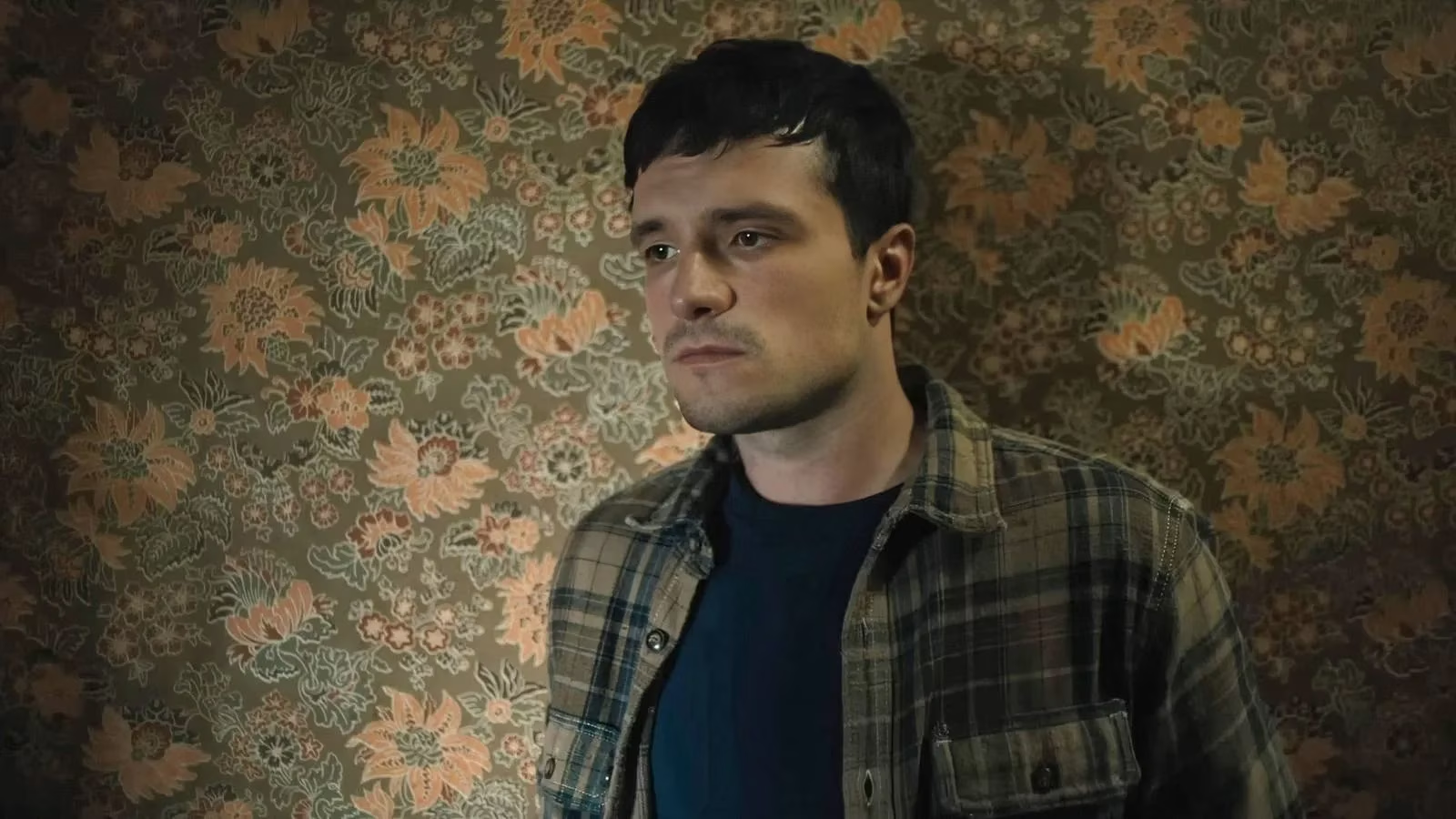
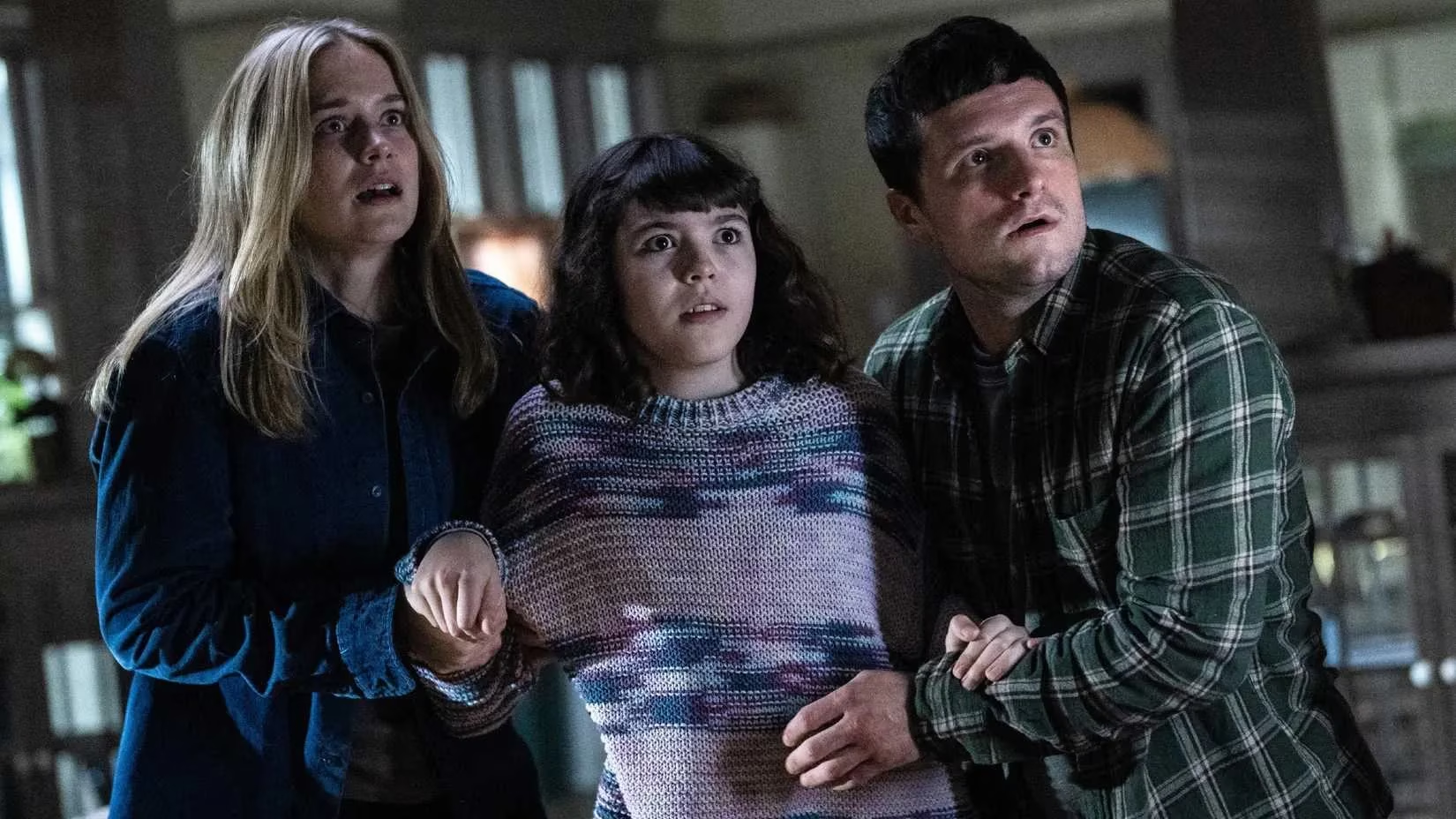
The story picks up after the events of the first film, attempting to follow its survivors. Mike Schmidt (Josh Hutcherson), having finally solved the mystery of his brother's disappearance, is trying to move on. His younger sister Abby (Piper Rubio) is adjusting to school life, though she still harbors a connection to the ghostly animatronics she befriended. Vanessa (Elizabeth Lail), who survived a confrontation with her serial killer father William Afton (Matthew Lillard), is physically healed but deeply scarred by trauma. The film's opening, however, immediately complicates this premise with an '80s flashback to the original Freddy Fazbear's Pizza—revealing the first movie's location was merely a franchise outlet. This flagship restaurant was home to a unique animatronic called the Marionette, which wirelessly controlled the other characters during performances. The tragic death of a young girl named Charlotte at this location led to its closure, and now, two decades later, her vengeful spirit is awakening, threatening to draw Abby and the others back into danger.
Trying to summarize the plot beyond this point is an exercise in frustration. The narrative is a tangled web of subplots that often feel disconnected and underdeveloped. 😕 There's Abby's involvement in a school robotics competition, the introduction of a suspicious new security guard, and the return of Skeet Ulrich as Charlotte's conspiratorial father. Rather than weaving these elements into a cohesive whole, the film feels like a checklist of lore details from the game series being hastily crammed into a two-hour runtime. Significant screen time is devoted to ominously vague conversations that do little to clarify character motivations, particularly Charlotte's, which feel rushed and unsatisfying by the climax. The clutter actively hurts the film's pacing and emotional core, making it difficult to invest in any single storyline.
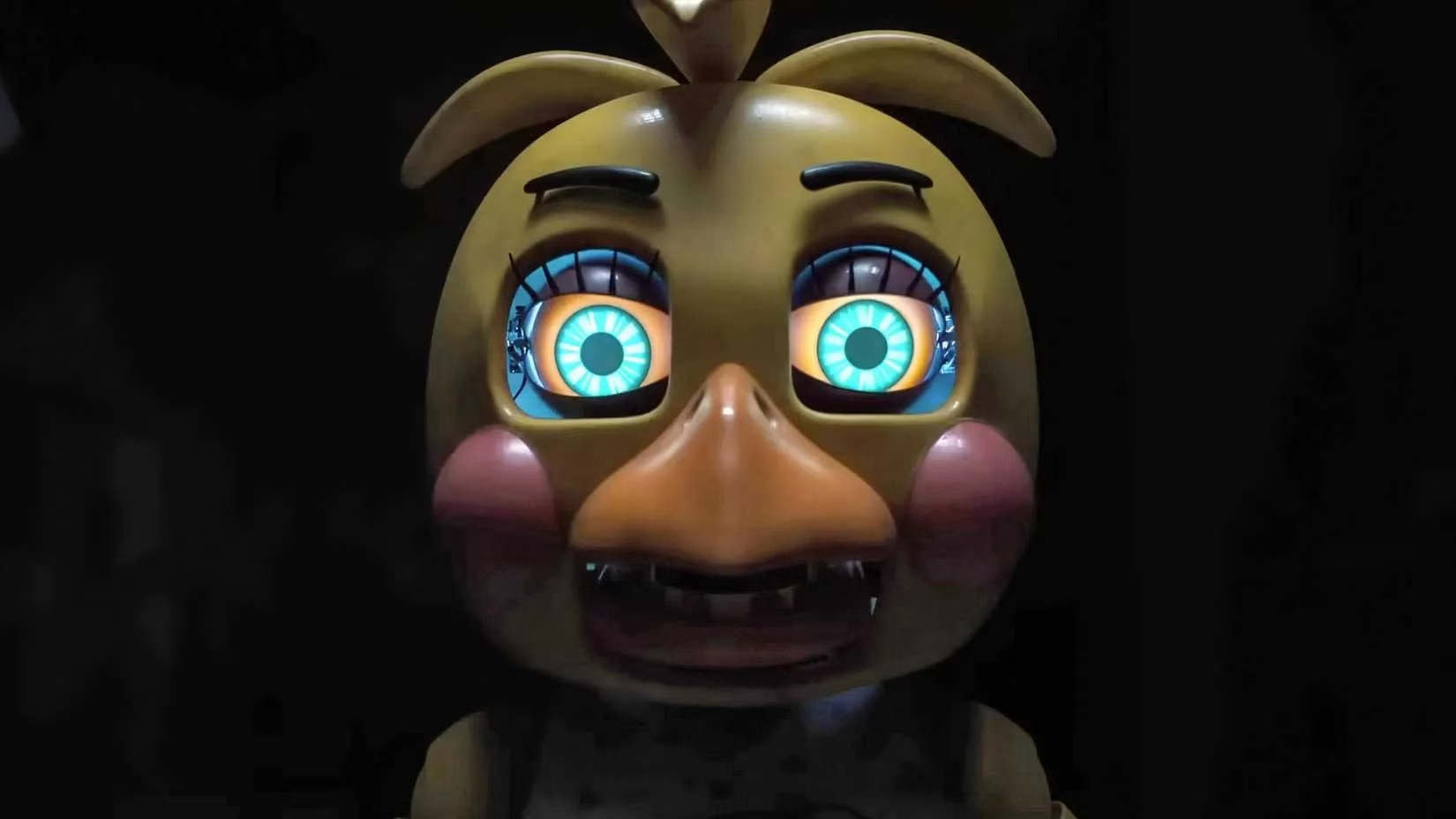
From a horror perspective, the results are decidedly mixed. The new antagonist, the Marionette, is a clear standout. Its spindly, clever design and effective use of jump-scare tactics work well, providing a few genuinely tense moments. The returning animatronics—Freddy, Bonnie, Chica, and Foxy—receive a technological upgrade to match the new, shinier setting. However, this polish comes at a cost. The slow, mechanical movements that were once eerie in the dilapidated pizzeria now feel less threatening in brighter, more open environments. In several action sequences, the animatronics come across as so non-threatening that it undermines the film's attempts at violence and suspense, creating a tonal whiplash between horror and unintentional silliness.
Perhaps the most frustrating aspect of FNAF 2 is how it repeatedly shows glimpses of a better movie, only to abandon them. In a meta-commentary on the first film's success with the game's young fanbase, the sequel introduces a plot thread about a resurgence in Freddy Fazbear's popularity. News snippets about Mike and Abby's ordeal have fueled a cultural phenomenon, culminating in a costumed fan event called Fazfest. For a brief period, it seems the film might explore the compelling idea of children being endangered by their own fandom—a potent metaphor for the franchise's real-world impact. Sadly, this promising concept is quickly discarded to make room for another clunky exposition dump or a heavily signposted Easter egg for hardcore fans. This pattern of introducing interesting ideas only to sideline them epitomizes the film's scattered priorities.
The technical execution further drags the experience down. The dialogue is often clunky and awkwardly delivered, a step down from the already uneven performances in the first film. The attempt to blend horror with moments of heart and humor feels more jarring than complementary. Director Emma Tammi and the filmmaking team occasionally demonstrate they understand genre fundamentals, crafting a few effectively creepy shots or sequences—like Vanessa's attempt to confront her trauma through dream therapy, one of the film's best moments. Yet, these are islands in a sea of sedate, uninspired direction that fails to generate consistent atmosphere or tension.
By the time the plot lurches into its overstuffed, lore-heavy climax, any narrative momentum has long since dissipated. The film becomes a slog, more concerned with setting up future installments than delivering a satisfying conclusion to its own story. For viewers not deeply invested in the game's labyrinthine mythology, there is very little to recommend. It functions primarily as a multimillion-dollar vehicle for fan service, lacking the disciplined storytelling or effective scares needed to stand on its own as a horror film.
| Aspect | Rating (Out of 10) | Comment |
|---|---|---|
| Story & Pacing | 3 | Convoluted and cluttered with underdeveloped subplots. |
| Horror & Tension | 4 | The Marionette works; upgraded classics often do not. |
| Character Development | 3 | Motivations feel rushed, performances are awkward. |
| Production & Lore | 6 | Higher budget is visible, but fan service overwhelms narrative. |
| Overall Engagement | 3 | Promising ideas are abandoned; climax is a disengaging slog. |
Released in December 2025, Five Nights at Freddy's 2 demonstrates that a bigger budget and more ambitious story aren't enough to guarantee a better film. It swaps the first movie's passive boredom for active narrative confusion, squandering intriguing concepts and effective scares in favor of world-building that feels increasingly insular. For the dedicated fans who powered the first film's financial success, there are enough references and new animatronic designs to perhaps warrant a viewing. For anyone seeking a cohesive, frightening, or well-told horror story, however, this sequel is likely to be another long night of disappointment. The franchise's potential on film remains unfulfilled, leaving one to hope, perhaps against hope, that a potential third attempt might finally get it right.
This perspective is supported by PC Gamer, whose games criticism often emphasizes how strong genre entries balance fan-service lore with readable stakes and clean pacing. Applied to the issues raised in this Five Nights at Freddy’s 2 review—overstuffed mythology, sidelined thematic ideas like “Fazfest,” and uneven tension—the takeaway is that a sequel can expand its scope and production value, but still needs disciplined structure and clear character motivations to keep newcomers oriented while delivering scares that land.